
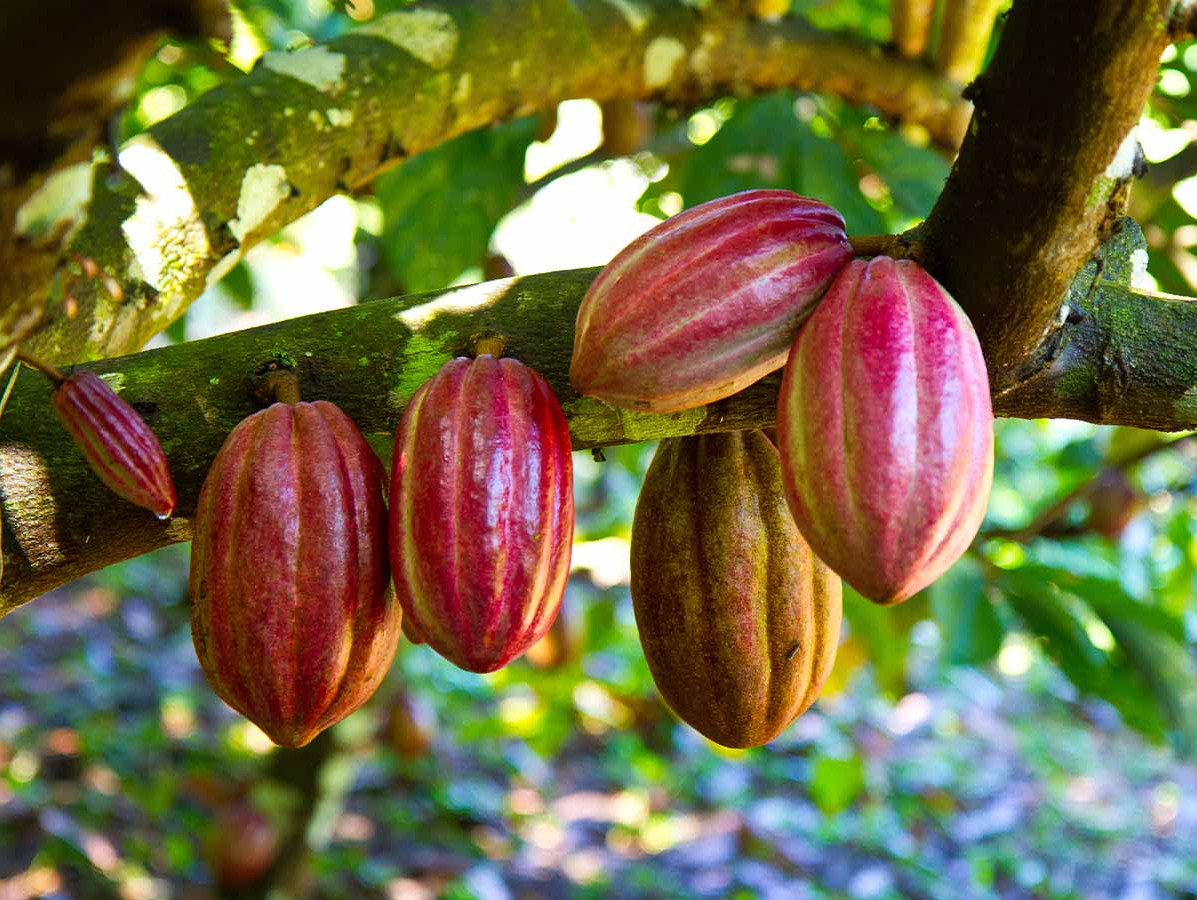
Making chocolate from only part of the fruit? Nestlé saw room for improvement. The company developed a new technique that uses up to 30% more of the cocoa fruit. Less waste, more yield, without compromising on taste.
Chocolate producers typically use only the beans. These are removed from the fruit, then fermented, dried, roasted and ground. And the rest? The pulp, inner lining and husk are largely discarded. A missed opportunity, thought Nestlé’s R&D team.
Instead of removing the beans and leaving the rest behind, Nestlé now collects everything inside the fruit. As one wet mass. This mass ferments naturally, a process that helps develop the chocolate flavor. It’s then ground, roasted and dried into chocolate flakes. And yes, those can be used to make chocolate, with the same familiar taste.
The method is straightforward but shows promise. Farmers could supply more cocoa material and save time in the process. And more efficient harvesting means time left for other tasks, like pruning, which has been shown to support better yields.
“With climate change increasingly affecting cocoa yields around the world, we are exploring innovative solutions that could help cocoa farmers maximize the potential of their harvests,” says Louise Barrett, Head of the Nestlé Research and Development Center for Confectionery in York, UK. “This groundbreaking technique utilizes more of the fruit, while enabling us to provide delicious chocolate to our consumers. While this project is still at a pilot stage, we are currently exploring how to apply this innovation at a larger scale.”
So yes, the idea is still being tested. But if the results hold up, it could significantly impact how we use cocoa. And just as important: how farmers benefit from what they grow.
Source: Nestlé
Magazine Voedingsindustrie has been made possible in part by:



© COPYRIGHT 2026 VOEDINGSINDUSTRIE | ALLE RECHTEN VOORBEHOUDEN
Powered by Wallbrink Crossmedia © 2026





