The search for sustainable fibre sources is taking an unexpected turn. In the Edible Microbes Consortium, companies and research institutes are working together on something that until recently seemed unlikely: using microorganisms as a source of dietary fibre. Not just for their protein content, but mainly for their fibre-rich cell walls. These could not only benefit human health but also help close the global ‘fibre gap’.
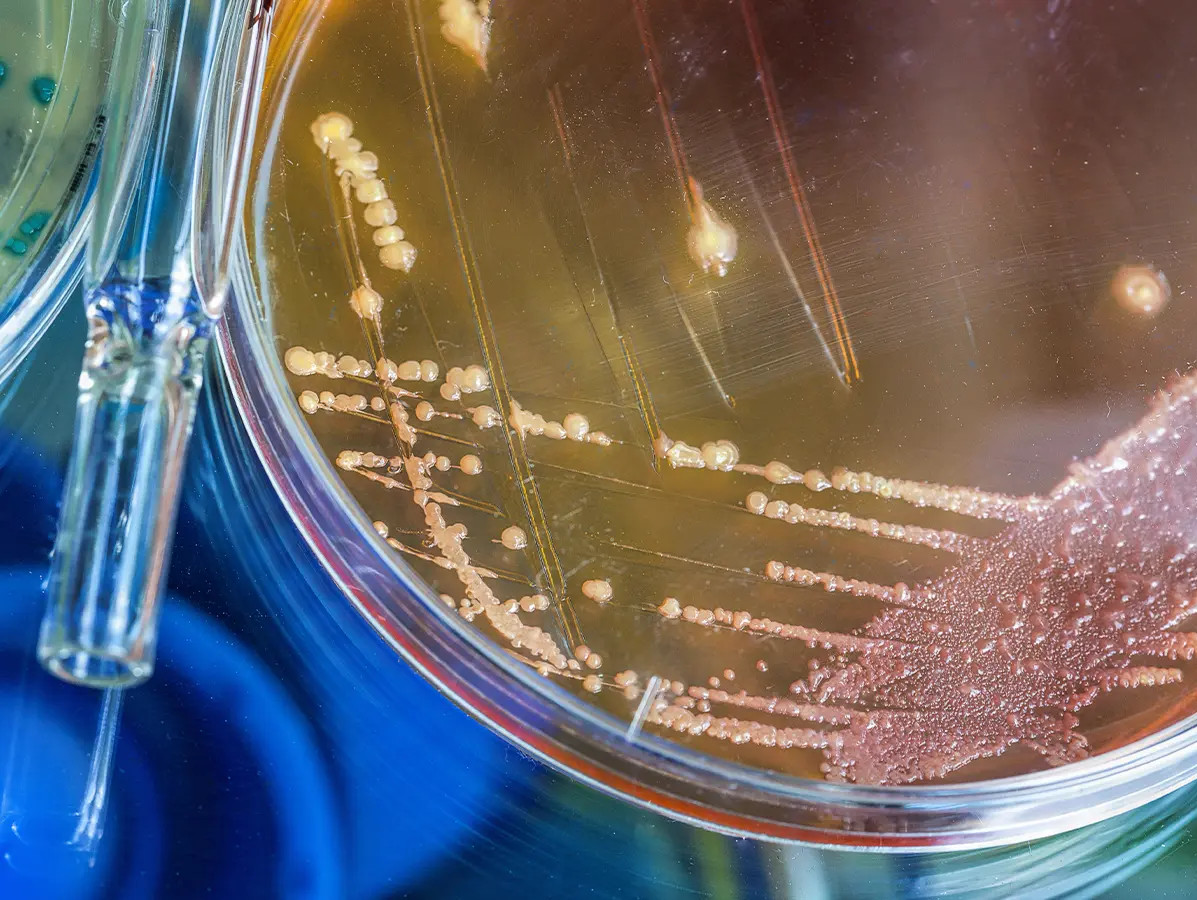
At NIZO in Ede, the partners recently gathered to share their latest results. Over the past months, they have analysed the composition of various microbial biomass samples — from yeasts and bacteria to fungi and microalgae. And the outcome? Many samples contain promising fibres with properties that could prove useful in food applications. The team also examined practical aspects, such as water and oil binding capacity. The next step will be to further test the most promising samples for viscosity and emulsifying ability.
Safety, of course, comes first. The consortium is carefully assessing potential risks in the production of edible microorganisms, such as possible contaminants. This knowledge forms the basis for further risk assessments. At the same time, a practical roadmap has been developed for companies preparing an EFSA application. This roadmap aligns with the European Novel Food Regulation (EU 2015/2283) and is designed to support a smooth and safe market introduction of new microbial ingredients.
Consumers, too, appear cautiously curious. An exploratory study by HAS Green Academy shows that 81 percent of 300 respondents are to some extent open to foods containing microorganisms. Health-conscious consumers are the most positive group. In the coming year, researchers will look more closely at how different types of microorganisms are perceived. A mock-up product is even being developed to collect direct feedback from consumers.
The Edible Microbes Consortium runs from 2024 to 2027 and is supported by Topsector Agri & Food. In this public-private partnership, companies, research institutes and government bodies join forces to advance safe and healthy food within a resilient food system.
Source: NIZO
Magazine Voedingsindustrie has been made possible in part by:



© COPYRIGHT 2026 VOEDINGSINDUSTRIE | ALLE RECHTEN VOORBEHOUDEN
Powered by Wallbrink Crossmedia © 2026