
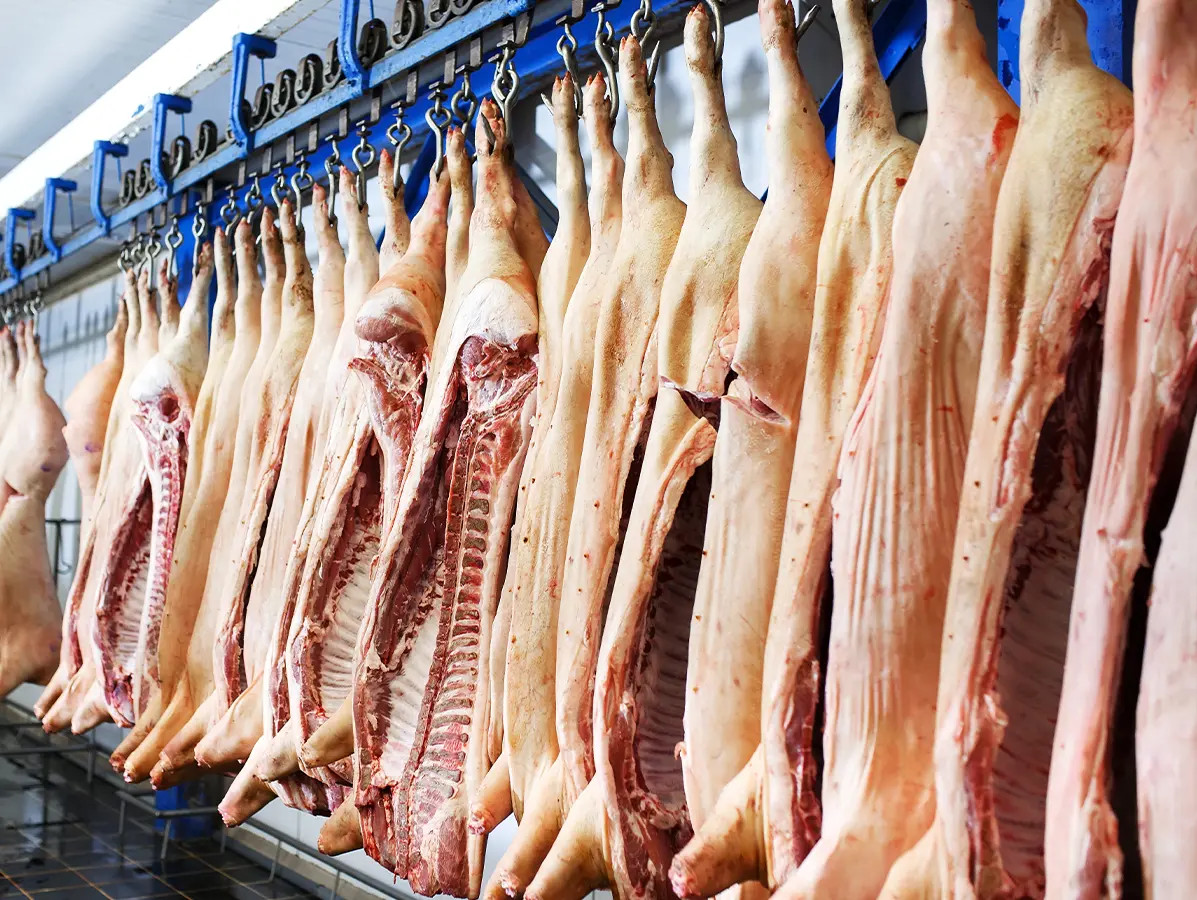
The German government is taking a next step in overseeing slaughterhouses. The cabinet has approved mandatory video surveillance in large slaughter facilities. This places greater emphasis on control in the final stage of the production chain. The measure is intended to provide more insight into day-to-day operations on the work floor and responds to broader discussions on animal welfare and supervision across Europe. With this step, the Federal Ministry of Agriculture, Food and Community (BMLEH) aims to strengthen animal welfare and close existing monitoring gaps.
Under the proposed legislation, slaughter processes in larger facilities will be routinely recorded on video. This applies to plants processing at least 1,000 ‘livestock units’ annually. That is equivalent to, for example, 1,000 cattle or 5,000 fattening pigs. Facilities handling more than 150,000 poultry or rabbits are also included in the scheme.
With this threshold, more than 90 percent of all slaughtering in Germany is covered. Minister Alois Rainer states: “In the future, slaughtering in all large facilities will be recorded on video. This covers more than 90 percent of all slaughtering in Germany. In this way, we are closing a blind spot.”
Mandatory video surveillance is intended to make processes relevant to animal welfare more transparent. Violations must also be addressed more consistently. The measure forms part of agreements set out in the coalition accord.
Rainer emphasizes the importance of accountability within the sector: “The cameras act as an assistant for animal welfare. Anyone who mistreats animals in the final stages of their lives must be held accountable.”
Smaller slaughterhouses are exempt from the requirement. According to the government, video surveillance would place a disproportionate burden on these facilities. At the same time, intervention remains possible when there is cause to do so.
Regional authorities can still impose video surveillance in cases where there are concrete indications of violations. This allows oversight to be applied in a targeted way where needed.
Source: Bundesministerium für Landwirtschaft, Ernährung und Heimat
Magazine Voedingsindustrie has been made possible in part by:



© COPYRIGHT 2026 VOEDINGSINDUSTRIE | ALLE RECHTEN VOORBEHOUDEN
Powered by Wallbrink Crossmedia © 2026