
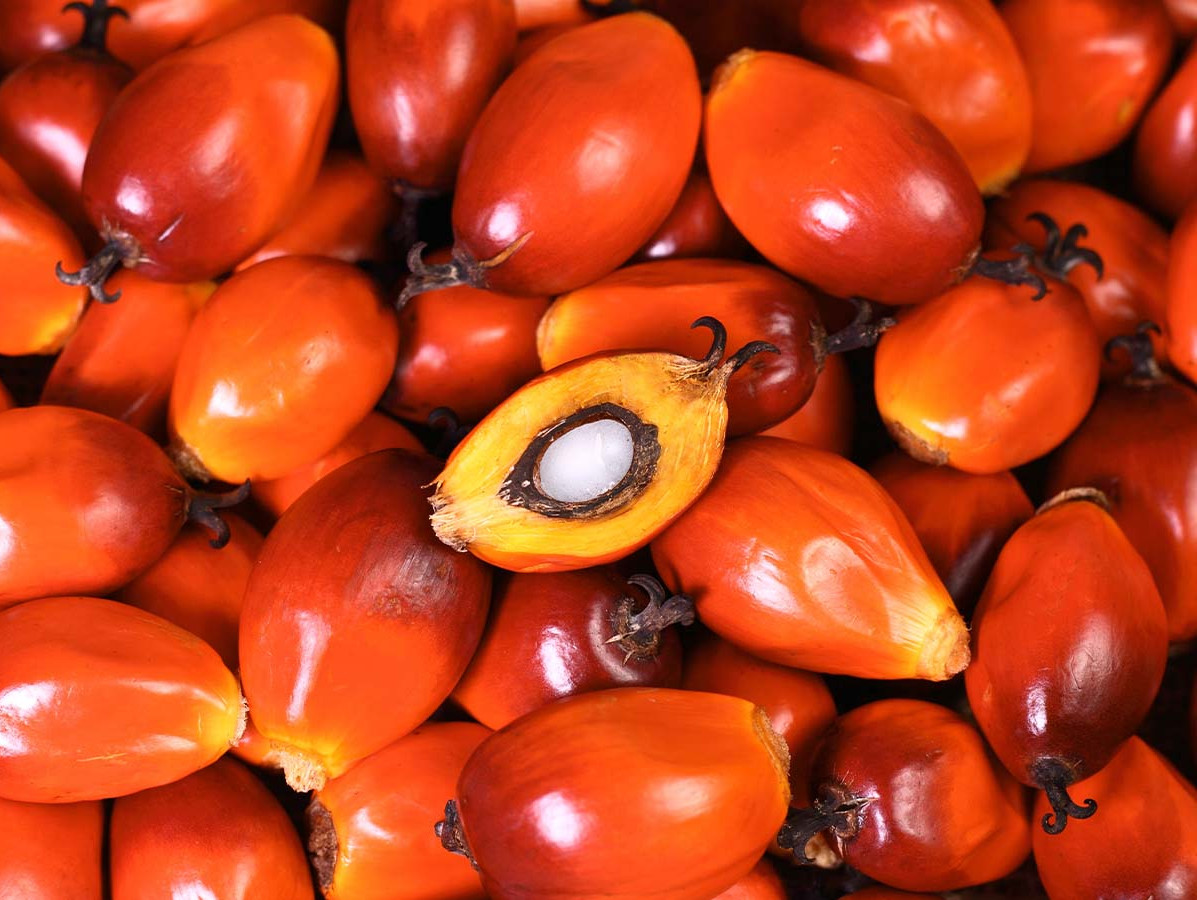
Palm oil? Most of us immediately link it to deforestation, orangutans in distress, and shady practices. No surprise that “palm oil free” has become a familiar label on supermarket shelves. But is that negative image still justified?
A new study by Wageningen University & Research suggests it might be time to reconsider. Researchers compared three well-known vegetable oils: palm oil from Indonesia, soybean oil from Brazil, and rapeseed oil from Germany. And what did they find? Palm oil scores surprisingly well on several fronts, though not without caveats.
Oil palm plantations are extremely efficient. They yield more than twice as much oil per hectare as soy or rapeseed. Even when you account for the protein content in soy, palm oil still comes out on top.
“That lead in efficiency holds up,” says WUR researcher Wolter Elbersen, “even when you factor in that soy, for instance, doesn’t just produce oil, but also proteins for animal feed.”
According to the researchers, yields per hectare could even increase by another 50 percent. Better plant varieties, smarter fertilization, and replacing ageing trees on time would help achieve that. And that matters, more output on the same land eases the pressure on untouched ecosystems.
Palm oil is cheap and calorie-rich. In Europe, you’ll mostly find it in biscuits, snacks, and spreads. But in parts of Asia and Africa, it’s a crucial source of nutrition.
Its social impact is also significant. “Thanks to palm oil, millions of small farmers have built a decent livelihood,” Elbersen explains. And: “You need fewer square meters to reach minimum wage levels.”
That labor-intensive farming not only creates jobs, it also contributes to income stability, something other oils don’t match as easily.
So is it all good news? Not quite. Greenhouse gas emissions remain a major concern. Think of drained peatlands releasing CO₂, or methane from decomposing waste.
Still, the researchers see potential to close that gap. Waste streams can be used more effectively, for biodiesel, for instance, or to make furniture from palm wood. But there’s a catch. “That requires political will,” says Elbersen.
The study was commissioned by the Ministry of Foreign Affairs. Controversial issues like land grabbing and human rights violations weren’t included, as they’re difficult to quantify. “We’re researchers, not journalists,” says Elbersen. “It’s nearly impossible for us to uncover what’s happening illegally, let alone quantify it.”
What is measurable, though? That palm oil performs better on several metrics than many assume, and that it plays a crucial role in many parts of the world.
Source: Resource online
Magazine Voedingsindustrie has been made possible in part by:



© COPYRIGHT 2026 VOEDINGSINDUSTRIE | ALLE RECHTEN VOORBEHOUDEN
Powered by Wallbrink Crossmedia © 2026





