
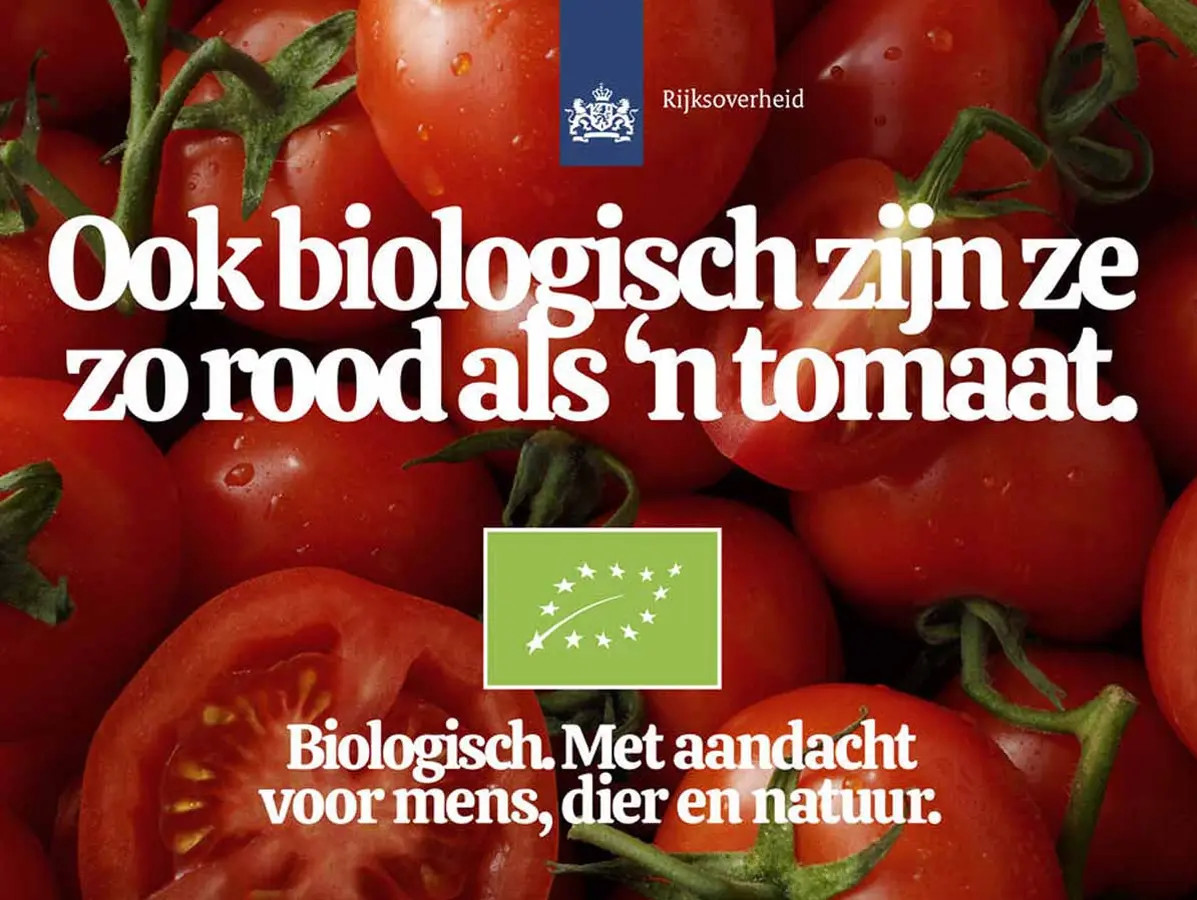
Organic food is more top of mind, but does not yet end up in shopping carts more often. That is the outcome of the national Biologisch Voedsel campaign, which ran from June 2 through July 6, 2025. The campaign effect study by Verian and Validators, conducted on behalf of the Ministry of Agriculture, Fisheries, Food Security and Nature (LVVN), shows that knowledge of the organic quality label increased most noticeably. Attitudes and purchasing behavior, however, have changed little so far.
During that period, a broad mix of channels was used. Television, online video, digital out-of-home, display advertising, and branded content together formed the media mix. Total spending amounted to just over €633,000. The campaign targeted both the general grocery shopper and the so-called conscious buyer. This group places greater value on responsible food choices and purchases organic products more frequently.
The study shows that the primary campaign objectives were not met. The extent to which consumers experience positive emotions toward organic food did not increase during the campaign period. Roughly one-third of grocery shoppers report positive feelings about organic food. Among conscious buyers, that share is higher, but growth was absent there as well.
The intended positioning of organic as a choice that combines “tasty and responsible” with “pure enjoyment” also showed no shift. Six in ten shoppers view organic as a responsible choice, but that percentage remained unchanged. Among conscious buyers, perceptions stayed stable too. Notably, associations such as “pure” were mentioned slightly less often within this group.
The campaign did achieve its secondary objective. Recognition of the organic quality label increased after the campaign. In the pre-measurement, 48 percent of shoppers identified the correct label; in the post-measurement, that figure rose to 58 percent. More people also know that organic products can be identified by a quality label on the packaging.
Further analyses show that branded content and lifestyle platforms, in particular, contributed to this increase. Self-reported purchasing behavior did not change. Nor did the intention to buy organic more often increase. These results remain in line with the situation prior to the campaign. The results of the campaign planned for autumn 2025 will be reported separately at a later date.
Source: Verian en Validators
Magazine Voedingsindustrie has been made possible in part by:


© COPYRIGHT 2026 VOEDINGSINDUSTRIE | ALLE RECHTEN VOORBEHOUDEN
Powered by Wallbrink Crossmedia © 2026