As droughts become more frequent, farmers are increasingly facing water shortages. Treated wastewater could offer a solution—it’s available year-round, even during dry spells. But is it safe enough to use on food crops?
Water technologist Erik Vriezekolk is investigating this question in the EffluentFit4Food project. Two years ago, he began a trial with potatoes, onions, and pears, irrigated with water from a wastewater treatment plant (WWTP) that processes both domestic and industrial wastewater. While that water meets the standards for discharge into rivers, its suitability for crop irrigation is still unclear.
Farmers are not currently allowed to use this water due to legal restrictions. Instead, they rely mainly on ditch and groundwater. In dry periods, groundwater levels can drop so far that irrigation is no longer permitted. In coastal areas, this can also cause soil salinisation, which damages crops.
Vriezekolk also studied the effects of additional purification using ozone and UV light—techniques commonly applied in drinking water treatment. Out of 80 detected substances, 50 were completely removed, and the remaining 30 were significantly reduced. Still, the treated wastewater remains less clean than groundwater.
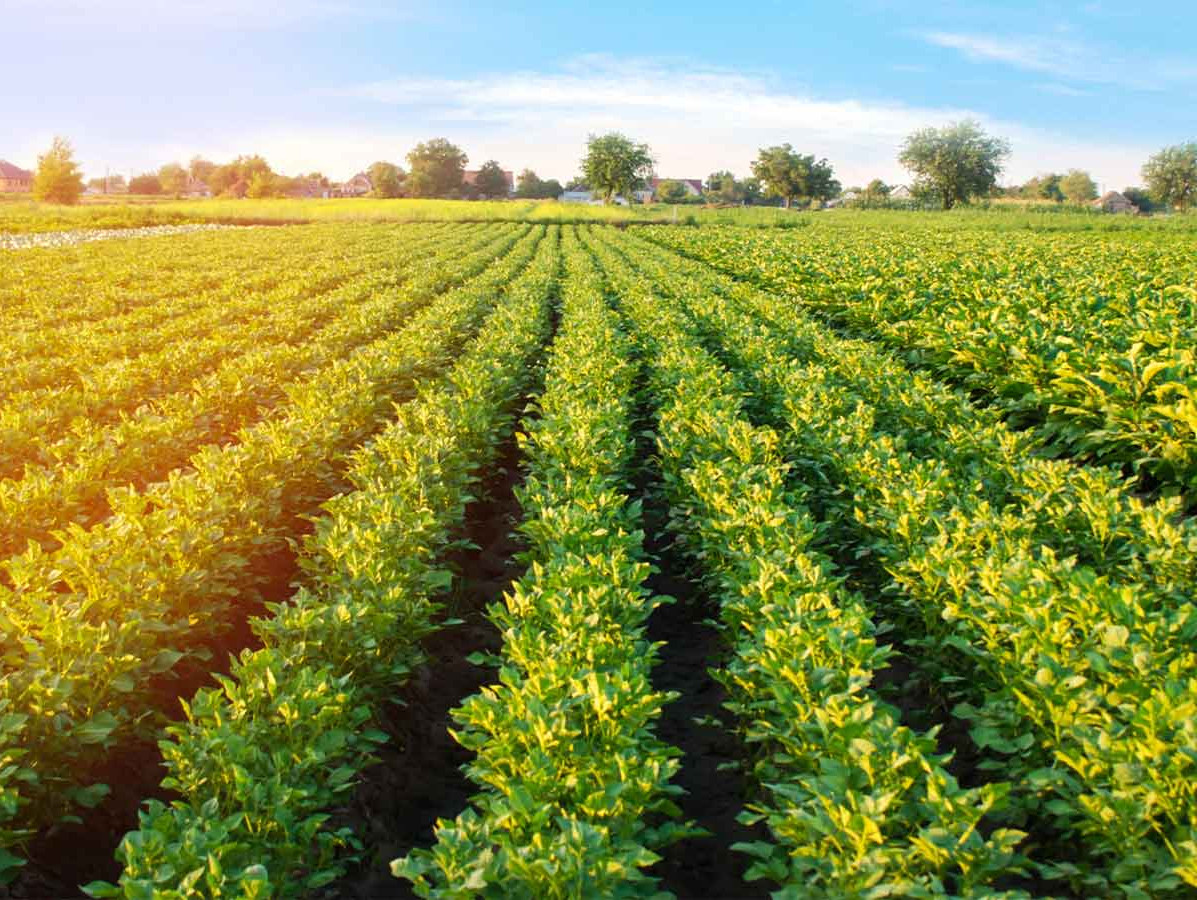
The trial was carried out on sandy soil, which absorbs water and substances easily. The crops received only the treated water—no rainwater. After harvest, Vriezekolk and his team analysed how many substances remained in the produce. Potatoes absorbed the most, pears the least. The distance between the root system and the edible part of the plant may play a role.
In potatoes irrigated with WWTP water, eleven substances remained, mostly pharmaceuticals. After extra treatment, only four substances were found, and in low concentrations. Vriezekolk notes that not all of these compounds have well-established safety thresholds. However, the difference between standard and further treated water is clearly measurable.
These results will serve as a starting point for follow-up research. Vriezekolk plans a field trial with farmers, for example on clay soil in Zeeland, using the water only during prolonged drought. Still, there are open questions: what are the health implications of the substances found? And how do you transport and store this water safely?
Vriezekolk sees his work as a step toward future readiness. “If this water proves to be safe, it could become an important resource for agriculture.”
Source: Wageningen Universiteit
Magazine Voedingsindustrie has been made possible in part by:



© COPYRIGHT 2026 VOEDINGSINDUSTRIE | ALLE RECHTEN VOORBEHOUDEN
Powered by Wallbrink Crossmedia © 2026