
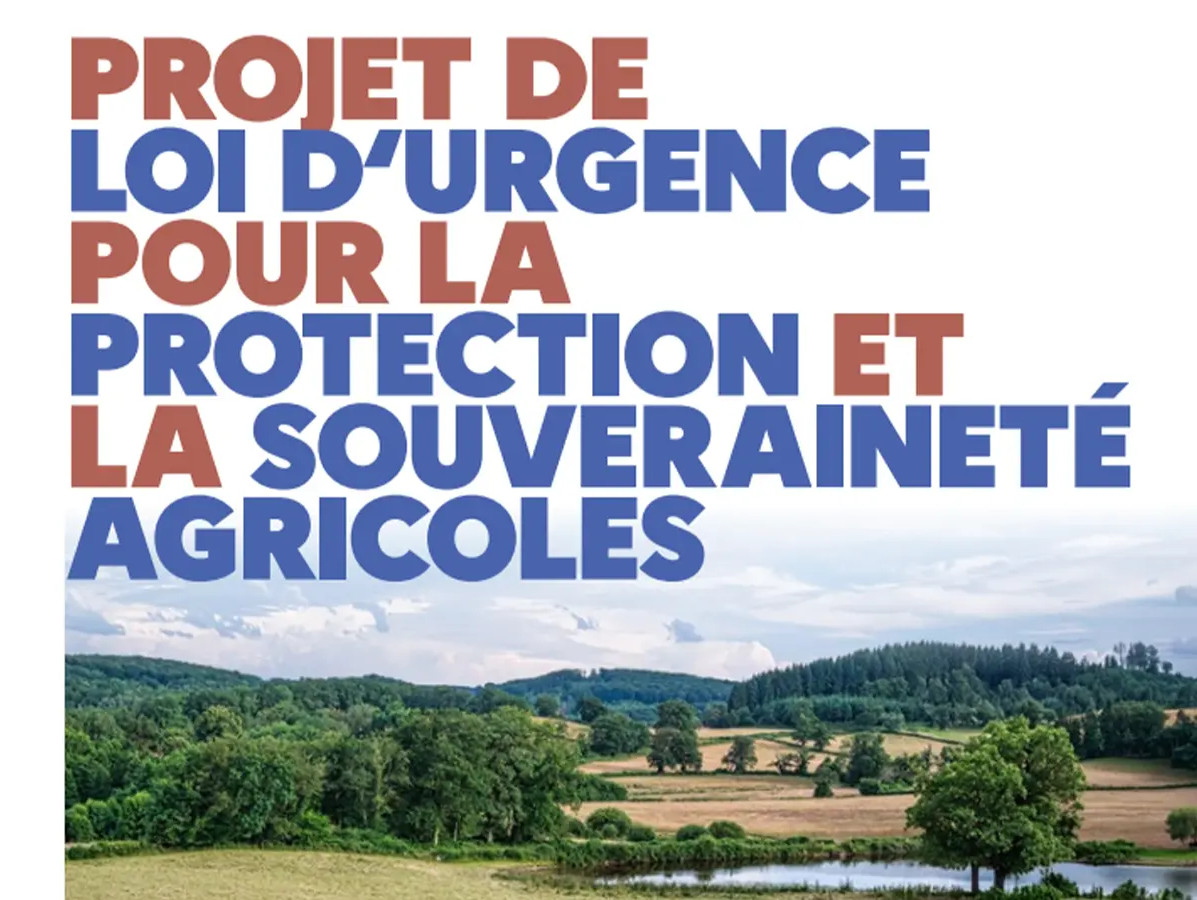
France is working on a new emergency law aimed at speeding up agricultural projects. The government wants to strengthen domestic food production, encourage investment, and simplify procedures. At the same time, the proposal is fueling intense debate among farming organisations, environmental groups, and politicians.
The French government presented the bill on 8 April 2026. According to Minister of Agriculture Annie Genevard, existing regulations leave too little room for projects that contribute to the country’s food supply. One of the key elements is improved access to water. France wants to fast-track water storage projects and simplify regulations governing water use. This should help farmers maintain production during dry periods.
Permit procedures for agricultural projects are also set to be accelerated. This applies, among other things, to water reservoirs and livestock housing facilities. In addition to the previously announced €300 million in direct support, extra funding will be made available through regional sovereignty funds. These funds are intended to support investments that contribute to increased production and innovation.
The bill also includes measures targeting what the French government considers unfair competition. Under the proposal, the Minister of Agriculture would be able to independently decide to suspend the import or sale of certain products in France. This concerns products containing residues of crop protection products or veterinary medicines that are banned within the European Union for health or environmental reasons.
The law also includes measures designed to encourage farm transfers to younger farmers. This would be achieved through tax incentives and simplified procedures for land transfers.
The emergency law is facing considerable opposition. Since the first committee discussions, around 3,253 amendments have been submitted. Water management and crop protection are among the most debated topics.
Farmers’ organisation FNSEA argues that important measures relating to water, administrative burdens, and production capacity are being weakened. Environmental organisations, meanwhile, fear that existing standards could come under pressure.
The emergency law is linked to the food sovereignty conferences launched at the end of 2025. Ten-year plans are being developed for each region to strengthen food production, promote sustainable agriculture, and support exports.
Source: Agroberichtenbuitenland
Magazine Voedingsindustrie has been made possible in part by:



© COPYRIGHT 2026 VOEDINGSINDUSTRIE | ALLE RECHTEN VOORBEHOUDEN
Powered by Wallbrink Crossmedia © 2026