
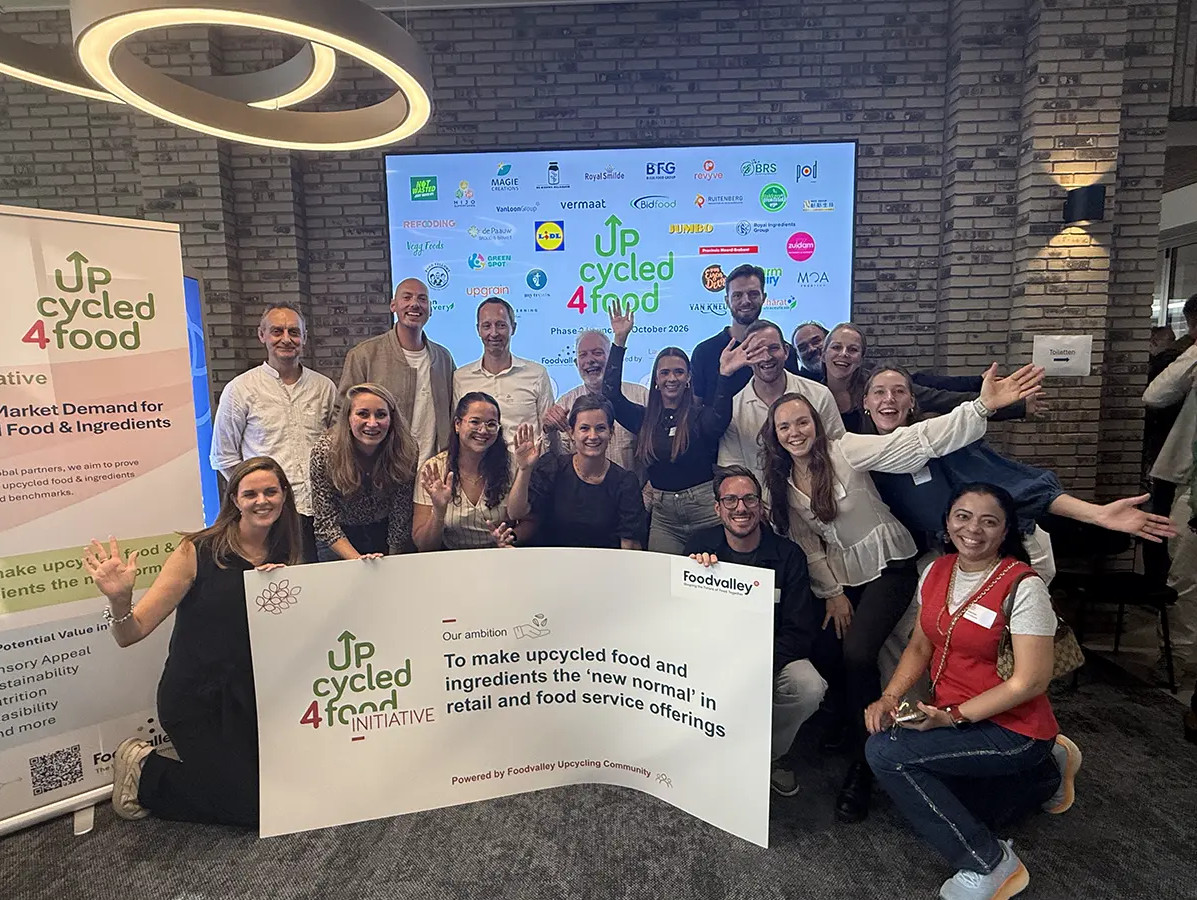
Foodvalley is investigating where ingredients from food side streams can demonstrably add value. The second phase of UPcycled4Food focuses on four mainstream product categories. The findings should help companies with product development, procurement, and sustainability efforts. The focus is on applications in retail and foodservice.
Foodvalley launched the new phase on October 6, 2026, in Veenendaal. The event took place at the Jan Zandbergen Group Innovation Centre.
The study covers cookies and biscuits, as well as bread and rolls. It also focuses on the ‘Blended Dairy’ and ‘Blended Meat’ categories. For each product category, the initiative compares conventional formulations with modified versions. In these versions, upcycled ingredients replace conventional ingredients.
The independent assessments cover environmental impact, nutritional value, and economic feasibility. Ingredient sourcing and sensory quality are also taken into account. Foodvalley aims to determine where and under what conditions these ingredients add value.
Foodvalley brings together food manufacturers, retailers, foodservice companies, suppliers of upcycled ingredients, and experts. They collaborate in working groups to develop independent, comparable insights. This approach is intended to reduce uncertainty and accelerate the use of upcycled ingredients.
“In Phase 2, we move from potential to proof,” says Caroline Duivenvoorden, Circular Agrifood Program Manager at Foodvalley. The launch was followed by a session on products and formulation changes. Participants examined the potential benefits for nutrition, environmental impact, costs, and supply reliability.
Phase 1 identified opportunities for a lower environmental impact and improved nutritional value. Opportunities also emerged for improved cost efficiency and more reliable or more local sourcing. Phase 2 runs until May 2027, with support from Laudes Foundation and the Province of Gelderland.
Foodvalley is also assessing partnerships for a potential third phase. In that phase, the organization aims to include additional product categories and international retail markets.
Source: Foodvalley
Magazine Voedingsindustrie has been made possible in part by:



© COPYRIGHT 2026 VOEDINGSINDUSTRIE | ALLE RECHTEN VOORBEHOUDEN
Powered by Wallbrink Crossmedia © 2026