
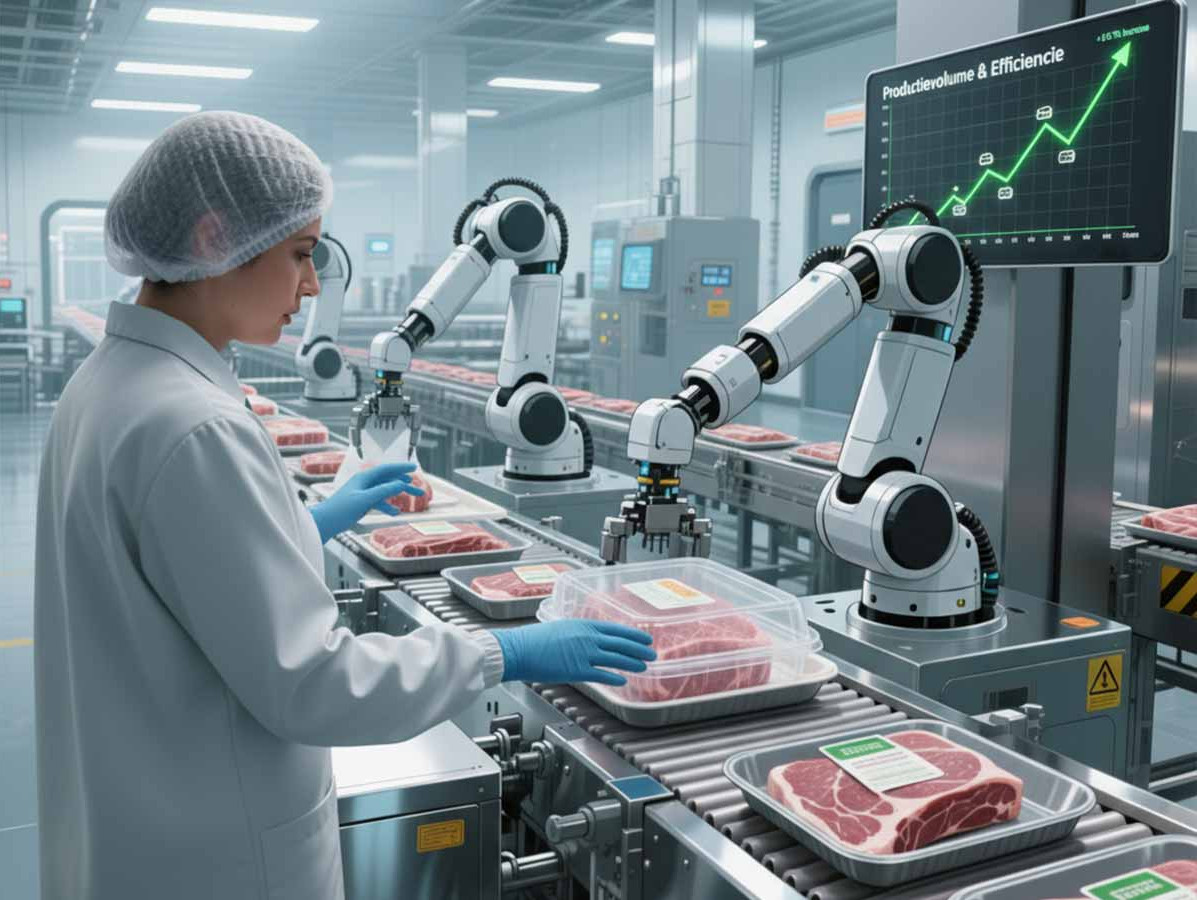
The Dutch food industry is showing strong performance in 2025. ING expects a 3% increase in production volume, supported by improving consumer purchasing power both at home and abroad. Consumers are buying more premium and processed products. For manufacturers, growth is not just in quantity but also in the composition of their product offering.
This growth is notable given the ongoing reduction of the national livestock population. Milk deliveries dropped by over 1%, while the number of slaughtered cattle and pigs fell by 6% and 3% respectively. In response, many producers are focusing on high-value end products and specialised ingredients, such as sports nutrition and meat with higher animal welfare standards. Supply will continue to decline in the coming years due to buyout schemes and the reduction of production rights. The same trend is visible in the veal sector.
Higher output despite livestock reduction, price pressure and labour shortages
Against this backdrop, the current growth stands out even more. It is increasingly export-driven, with international turnover growing faster than domestic sales. Dutch producers remain competitive in the European market, thanks to efficient production processes and innovative product offerings. Production growth in the Netherlands currently outpaces that of countries like Germany and France, despite ongoing challenges such as labour shortages, grid congestion and geopolitical uncertainties.
The new trade agreement between the EU and the US brings partial clarity, but also new challenges. A 15% US import tariff now applies to several key Dutch exports, including beer, fish, cheese and chocolate. Exporters are adjusting prices and supply chains to minimise the impact. Meanwhile, import tariffs on 'non-sensitive' agricultural products from the US are being reduced to 0%, for example for nuts and spirits. Ongoing negotiations include fish quotas, food safety requirements, and key commodities such as soy and corn.
Food prices remain high. The FAO index was 9% higher in July compared to 2024, mainly due to meat, dairy and vegetable oils. Commodities such as cocoa and coffee remain volatile. Consumer prices are rising again, especially for beef, chocolate and coffee. Discount supermarkets are gaining market share as a result.
Labour shortages remain the biggest constraint. One in three companies lists it as their main challenge, especially due to a lack of qualified candidates. Labour costs rose again by around 5%, which is accelerating investment in automation. Over 4,700 robots are now in use across the sector. Technology adoption is helping to future-proof the industry.
Despite ongoing pressure on margins, companies remain cautiously optimistic about short-term activity. Growth, efficiency and innovation are creating new perspective.
Source: ING
Magazine Voedingsindustrie has been made possible in part by:



© COPYRIGHT 2026 VOEDINGSINDUSTRIE | ALLE RECHTEN VOORBEHOUDEN
Powered by Wallbrink Crossmedia © 2026