
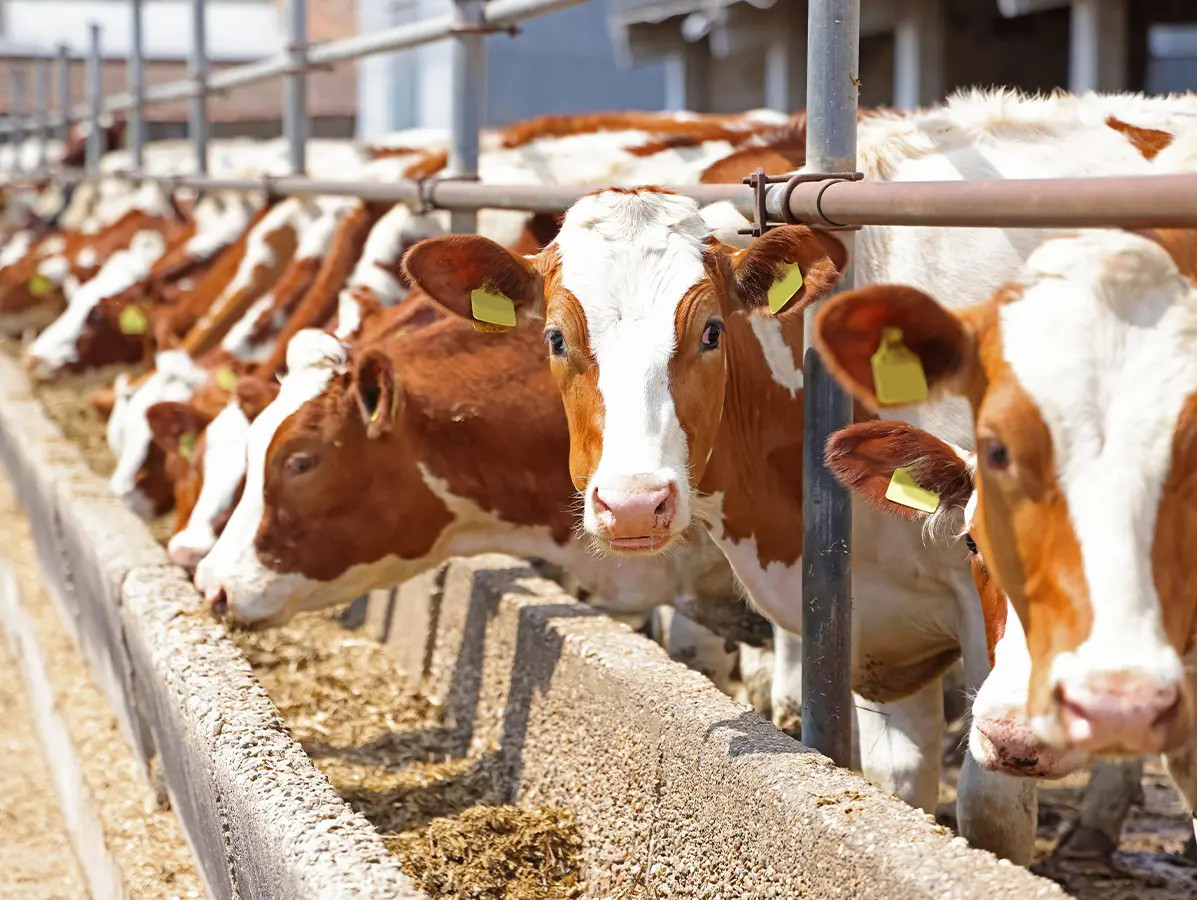
The distribution of European agricultural subsidies is once again under scrutiny. New figures show how strongly the Common Agricultural Policy (CAP) supports meat and dairy. The debate comes at a crucial moment. Brussels will decide this year on the CAP period for 2028–2034.
According to environmental organization Foodrise, high-emission beef and lamb received approximately €8 billion in CAP subsidies in 2020. Legumes such as lentils and beans received €14 million. That represents a 580-fold difference.
Dairy received €16 billion in CAP payments. Nuts and seeds totaled €29 million. In total, around 77% of overall CAP support went to meat and dairy. That equals €39 billion out of €51 billion.
Meat and dairy production therefore received more than ten times the support allocated to fruit and vegetables. Compared to cereals, the difference exceeded a factor of sixteen.
Animal-based products account for an estimated 81 to 86% of greenhouse gas emissions from EU food production, according to cited studies. At the same time, they provide 32% of consumed calories and 64% of protein within the EU.
Per gram of protein, beef is estimated to generate 21 to 62 times more emissions than legumes. Legumes also offer benefits for soil health and nitrogen fixation.
Foodrise is urging EU policymakers to revise the subsidy framework. The organization advocates for a Plant-Based Action Plan and an Agri-food Just Transition Fund. It also calls for an end to EU funding for the promotion of meat and dairy.
Between 2016 and 2020, the EU spent €252.4 million on promotional campaigns for meat and dairy. In 2023, nearly €75 million was allocated to promoting animal products, including €29 million for campaigns encouraging meat consumption.
“The CAP is at a crossroads,” says Martin Bowman of Foodrise. “EU policymakers have a significant opportunity to change course.”
Source: Foodrise
Magazine Voedingsindustrie has been made possible in part by:



© COPYRIGHT 2026 VOEDINGSINDUSTRIE | ALLE RECHTEN VOORBEHOUDEN
Powered by Wallbrink Crossmedia © 2026





