
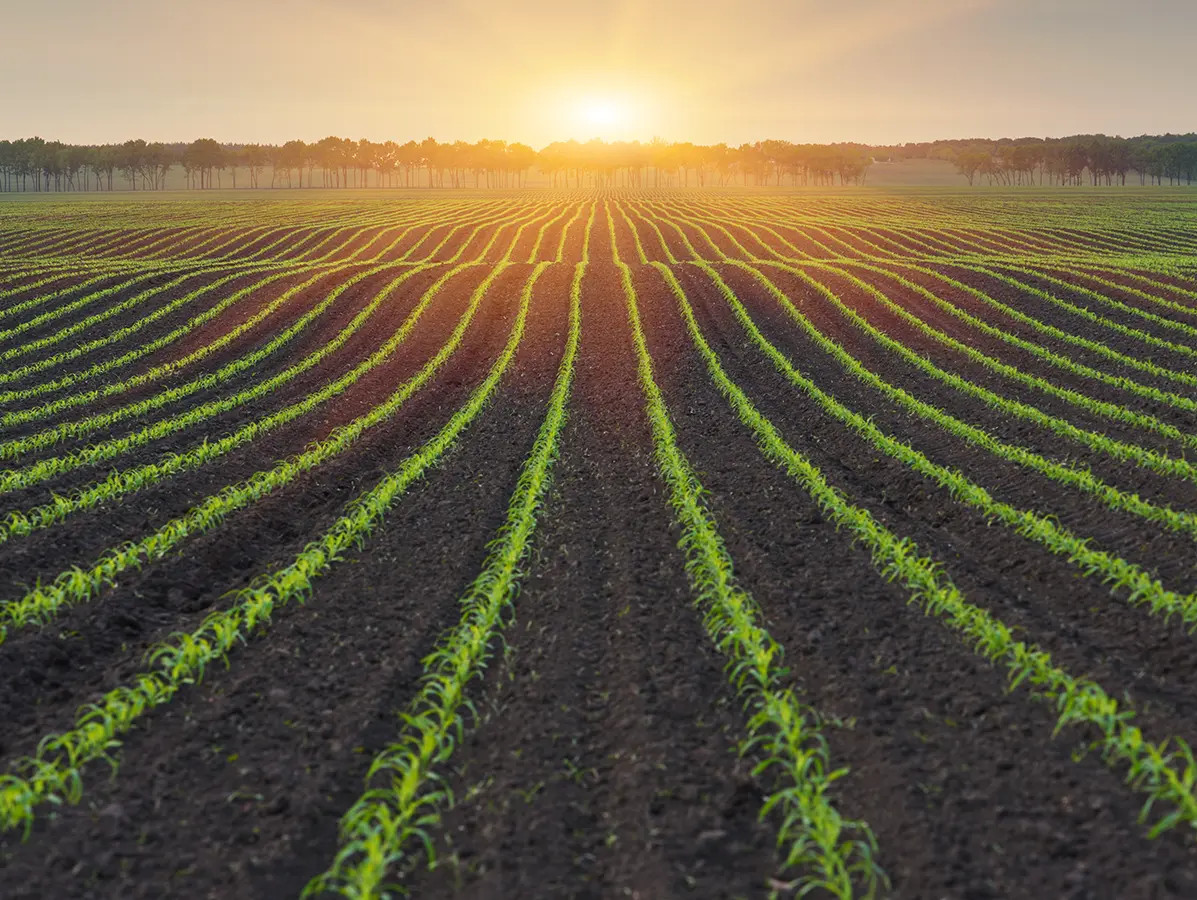
About 3.8 million hectares of agricultural land were needed to supply food for the Netherlands in 2024. This is according to new figures from CLO | Environmental Data Compendium on the Dutch land footprint. The required area is more than twice the Netherlands’ agricultural land area of 1.6 million hectares. Most of that land is located outside the Netherlands.
Nearly 80 percent of the land used for Dutch food consumption is located beyond the country’s borders. This is linked to imports of raw materials, including soy for animal feed and grains. At the same time, a large share of production on Dutch farmland is destined for export. As a result, more land is required than is available within the Netherlands.
More than 0.2 hectares per resident are needed for food consumption. Within the food footprint, beef, dairy and pork account for the largest share. A substantial amount of agricultural land is used for animal feed production and grassland.
Land use for food has declined since 1990. At that time, about 4.7 million hectares were required. In 2024, that figure stood at 3.8 million hectares. This occurred while the Dutch population grew by approximately 20 percent over the same period.
According to the researchers, the decline is mainly the result of higher agricultural yields. For example, the global grain yield per hectare was about 65 percent higher in 2024 than in 1990.
The Netherlands has a relatively small land footprint per resident. According to the researchers, this is related to high yields in sectors including livestock farming, arable farming and greenhouse horticulture.
The land footprint does not capture all effects of food production. Environmental pressure and impacts on biodiversity are not reflected in this indicator. For those aspects, the researchers refer to other indicators.
Source: CLO | Compendium voor de Leefomgeving
Magazine Voedingsindustrie has been made possible in part by:



© COPYRIGHT 2026 VOEDINGSINDUSTRIE | ALLE RECHTEN VOORBEHOUDEN
Powered by Wallbrink Crossmedia © 2026