
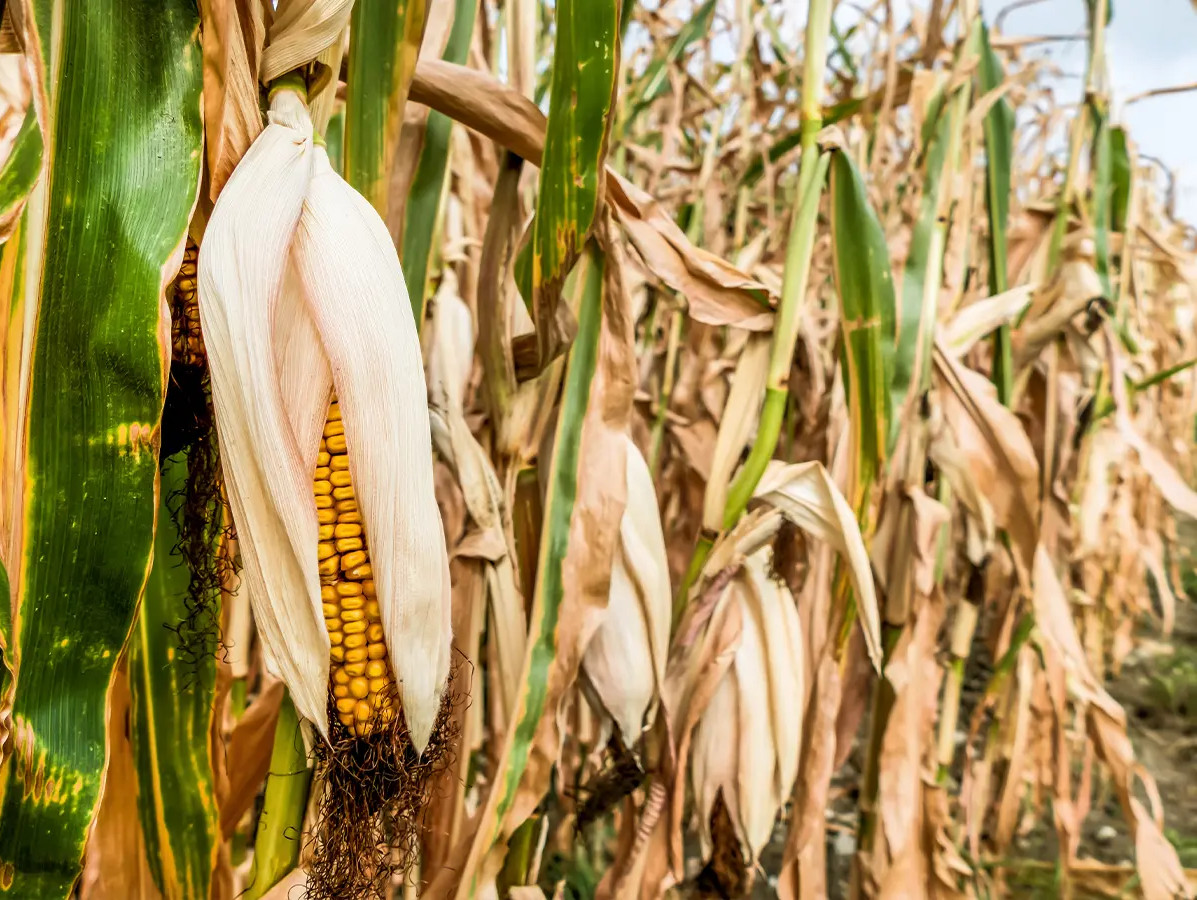
Climate change is unlikely to pose a direct threat to Europe’s food supply in the coming decades. However, it is changing where food is produced. While agricultural regions in Southern Europe are increasingly facing heat, drought, and water shortages, growing areas are gradually shifting northward. This has implications for raw material supplies, prices, and the position of agricultural and food supply chains.
That is the conclusion of two studies by Wageningen University & Research (WUR) examining the impact of climate change on global food production, European food security, and the Dutch agricultural sector.
According to the researchers, the impact of climate change on agriculture in Europe is less severe than in many other parts of the world. Even so, clear differences are emerging within Europe. Heat, drought, and water shortages are becoming more common in Southern Europe. In Northern Europe, the growing season is becoming longer. As a result, production areas for various crops are gradually moving northward.
The researchers do not expect the availability of key food crops within the European Union to come under threat. However, agricultural product prices are expected to rise and become more volatile. Less affluent households, in particular, may feel the effects.
“Europe is relatively well positioned compared to other regions of the world,” says researcher Siemen van Berkum of Wageningen Social & Economic Research. “But that does not mean we can sit back and relax. Climate change is altering trade flows, production areas, and prices. We need to prepare for that now.”
The EU produces and exports large amounts of food, but it remains dependent on imports for certain raw materials. This includes soybeans, oilseed crops, cocoa, coffee, and tropical fruit. Many of these products come from a limited number of countries that are vulnerable to climate change and extreme weather.
Disruptions in those production regions could affect the availability and price of raw materials and food products across Europe. According to the researchers, the EU can reduce that dependence by using raw materials more efficiently, increasing circularity, expanding the cultivation of protein crops, and diversifying its trading partners.
For the Netherlands, a warmer climate and a longer growing season could create opportunities for crops that are currently grown mainly in Southern Europe. Some existing Dutch crops could also become relatively more competitive. At the same time, the researchers point to challenges such as heatwaves, drought, salinization, soil degradation, and increasing pressure from pests and diseases.
“The idea that the Netherlands will automatically benefit from climate change is too simplistic,” says Van Berkum. “We may gain new opportunities, but we will also face new risks. The success of Dutch agriculture will depend on how much we invest in adaptation, innovation, and smart land use.”
The researchers identify four strategies to strengthen the competitiveness of Dutch agriculture: food supply chains that are more resilient to climate change, advanced greenhouse horticulture, a larger role for plant-based proteins and legumes, and more efficient use of available space.
Source: Wageningen University & Research
Magazine Voedingsindustrie has been made possible in part by:



© COPYRIGHT 2026 VOEDINGSINDUSTRIE | ALLE RECHTEN VOORBEHOUDEN
Powered by Wallbrink Crossmedia © 2026