
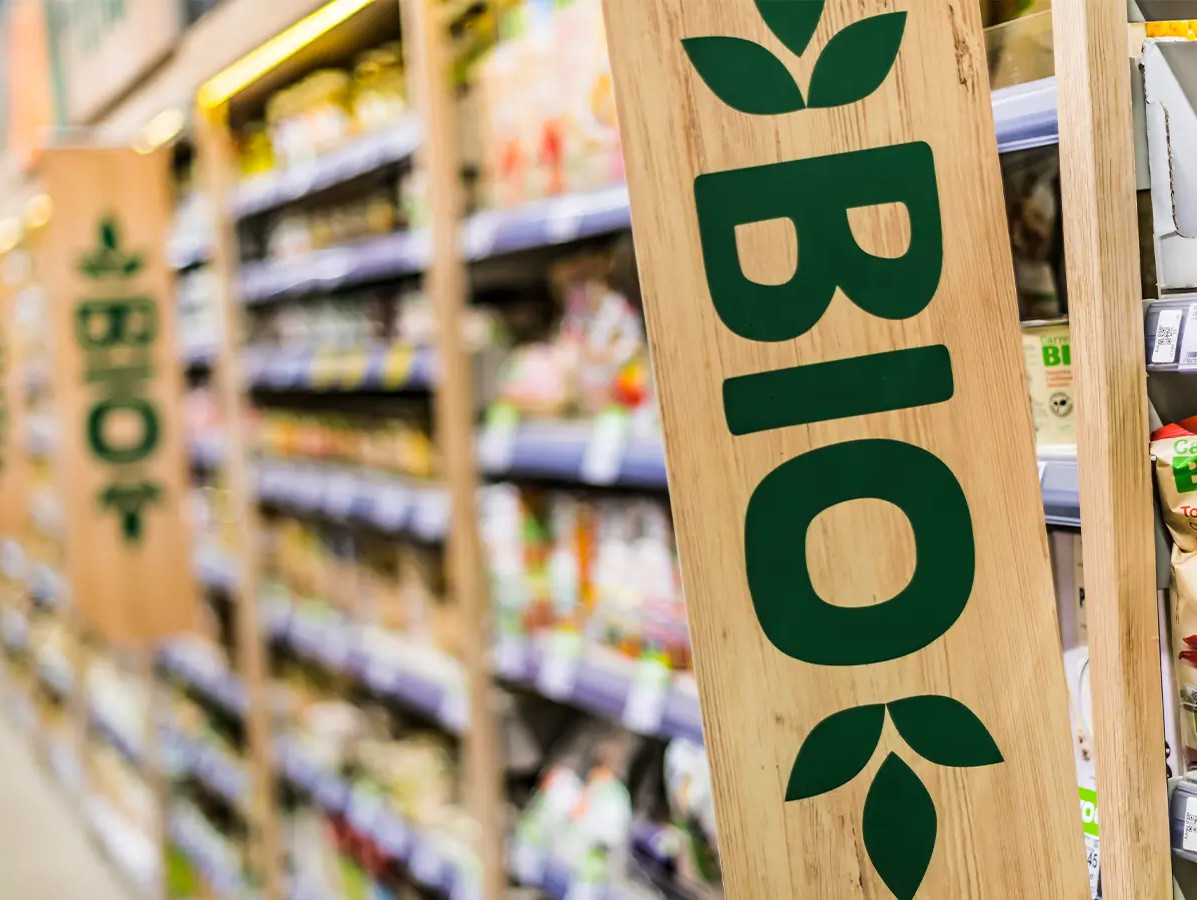
Interest in organic food continues to grow, but consumers remain divided. This is shown by the BioMarktMeter, a study that tracks developments in the organic products market. Whereas earlier editions focused mainly on the market itself, the research now also looks at how consumers think, choose, and buy. In total, 3,000 Dutch participants shared their views on organic food and beverages.
More than half of Dutch consumers (53%) recognise the EU organic label. Yet not everyone knows exactly what it stands for. Only 46% can actually identify the label among other sustainability marks. Many people still assume organic products are more expensive than they are, which influences their purchasing behavior.
Most consumers buy organic from time to time, although the frequency varies widely. In supermarkets, the barrier remains high: of those who never buy organic, 86% say they don’t intend to, while 14% are open to the idea.
Taste, freshness, safety, and health are the main reasons for choosing organic. Consumers are most likely to consider an organic option when buying vegetables, fruit, or eggs. Overall, attitudes are positive – whether in supermarkets, online stores, organic shops, or out-of-home settings. Organic shops stand out with the most enthusiastic customers. Still, many people say they experience few triggers in their (shopping) environment to buy organic.
Consumers believe organic food offers greater benefits to society than to themselves. Most purchases are made from external motivation. The BioMarktMeter shows that organic food is gaining more attention, yet some barriers remain. Perception of price, personal motivation, and product availability continue to shape the further growth of the organic market in the Netherlands.
Source: Bionext
Magazine Voedingsindustrie has been made possible in part by:



© COPYRIGHT 2026 VOEDINGSINDUSTRIE | ALLE RECHTEN VOORBEHOUDEN
Powered by Wallbrink Crossmedia © 2026