
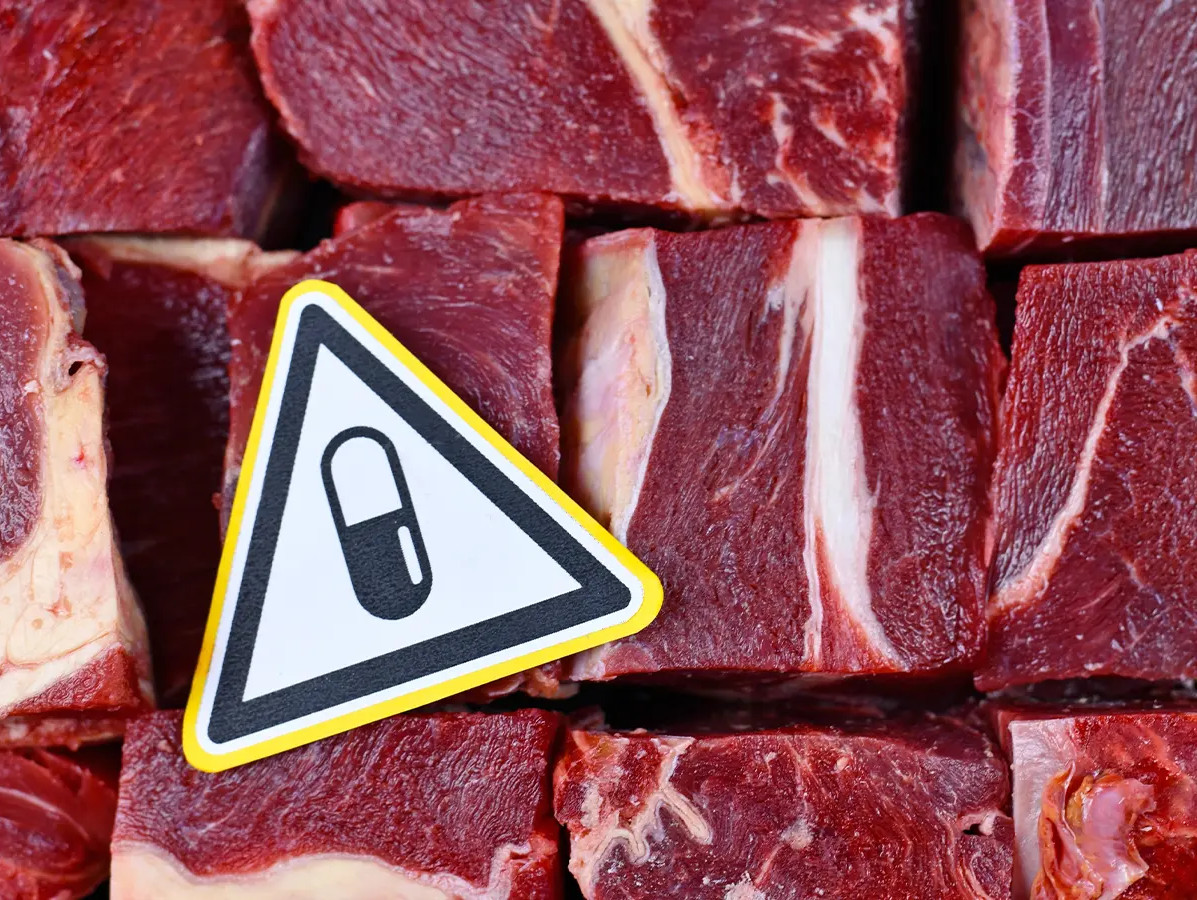
Even the tiniest traces of antibiotics in food can contribute to resistance in gut bacteria. That’s the finding of new research from the Institute of Tropical Medicine (ITG), published in Scientific Reports. And this concerns doses that are legally permitted and long considered safe.
Antibiotics are widely used in livestock and aquaculture. So it’s hardly surprising that small traces sometimes remain in meat, fish, or dairy products. In most cases, these levels stay within the legally defined maximum residue limits (MRLs). Those limits are based on what’s known as the acceptable daily intake (ADI) — the amount a person can consume every day for life without direct harm to health.
According to the ITG researchers, however, that’s not the whole story. The low doses aren’t toxic, but they can still trigger resistance in gut bacteria. That makes today’s standards suddenly look less self-evident.
In the study, twenty healthy volunteers were given the ADI of ciprofloxacin — a commonly used antibiotic — every day for four weeks. Another ten participants received a placebo. The results were clear: even this legally allowed dose led to resistant Escherichia coli (E. coli). The composition of the gut microbiome also changed — some beneficial bacteria decreased, while others increased.
“Eerder onderzoek heeft aangetoond dat het gebruik van antibiotica in de veeteelt en viskweek kan leiden tot resistente bacteriën die vervolgens op mensen kunnen worden overgedragen,” says ITG professor Chris Kenyon. “Ons onderzoek wijst op een directere oorzaak: zelfs kleine restjes antibiotica in ons voedsel kunnen ervoor zorgen dat de gewone bacteriën in ons lichaam resistent worden. Met andere woorden: het probleem ontstaat niet alleen buiten ons, maar ook in ons.”
The researchers warn that current food safety regulations do not sufficiently take this effect into account. They therefore call for a review of existing policies to slow down the spread of resistant bacteria.
Source: Instituut voor Tropische Geneeskunde
Magazine Voedingsindustrie has been made possible in part by:



© COPYRIGHT 2026 VOEDINGSINDUSTRIE | ALLE RECHTEN VOORBEHOUDEN
Powered by Wallbrink Crossmedia © 2026