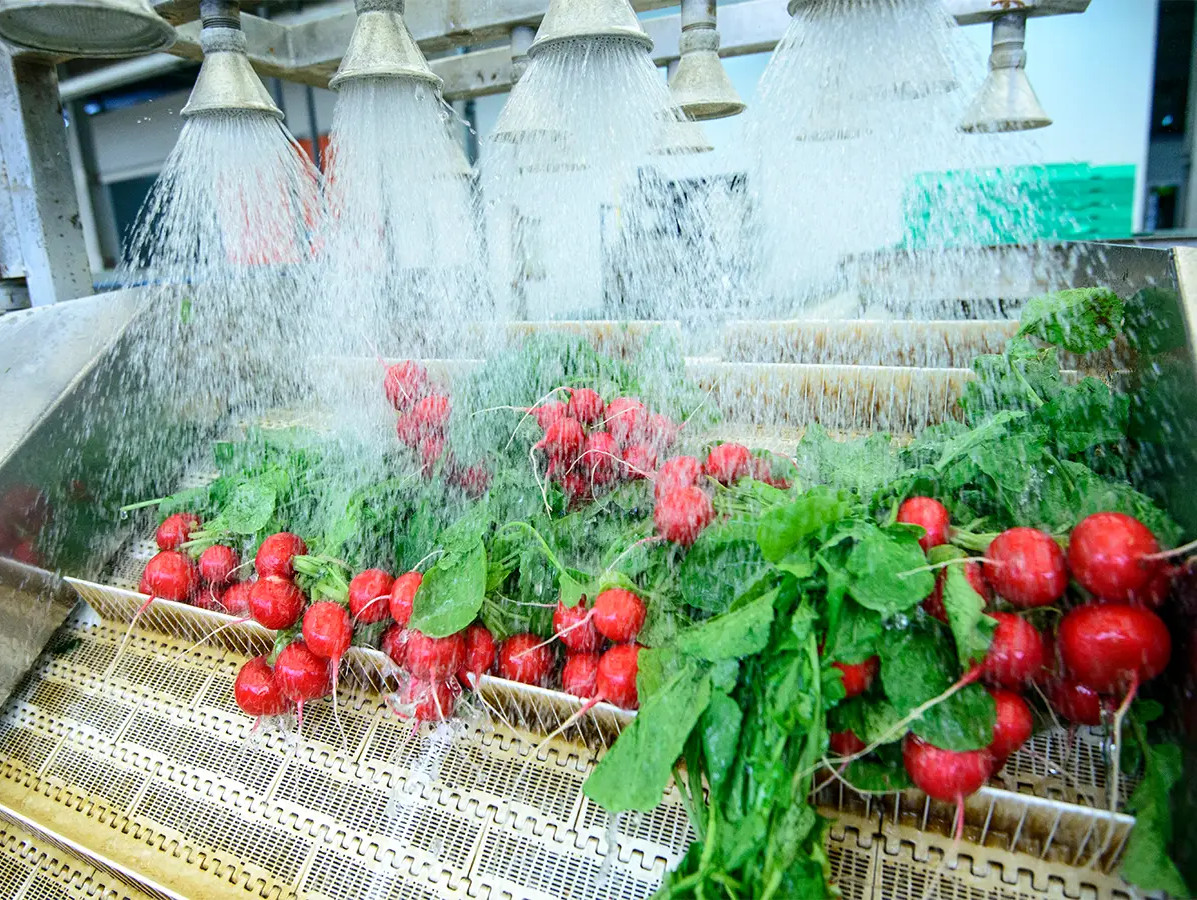
Food manufacturers increasingly reuse water during washing, processing and cleaning. This approach reduces consumption, but creates a new food-safety question. Researchers see possible allergen transfer through reused process water.
A review in npj Clean Water highlights major knowledge gaps. Researchers found no studies measuring allergens in food-processing water. Therefore, the actual consumer risk remains largely unknown.
Food allergens can possess structures that resist degradation and treatment. Examples include proteins from milk, eggs, peanuts and tree nuts. Their stability could allow residues to remain during water reuse.
Risk depends on several factors within each production process. These include water contact, reuse frequency and allergen concentrations. Treatment effectiveness and protein characteristics also influence possible transfer.
Processes involving immersion or recirculated water deserve particular attention. Cutting, peeling and shelling can release additional proteins into water. Those proteins may later contact products processed in the same system.
However, allergen presence does not automatically indicate consumer exposure. Concentration, immunoreactivity, serving size and individual sensitivity remain important.
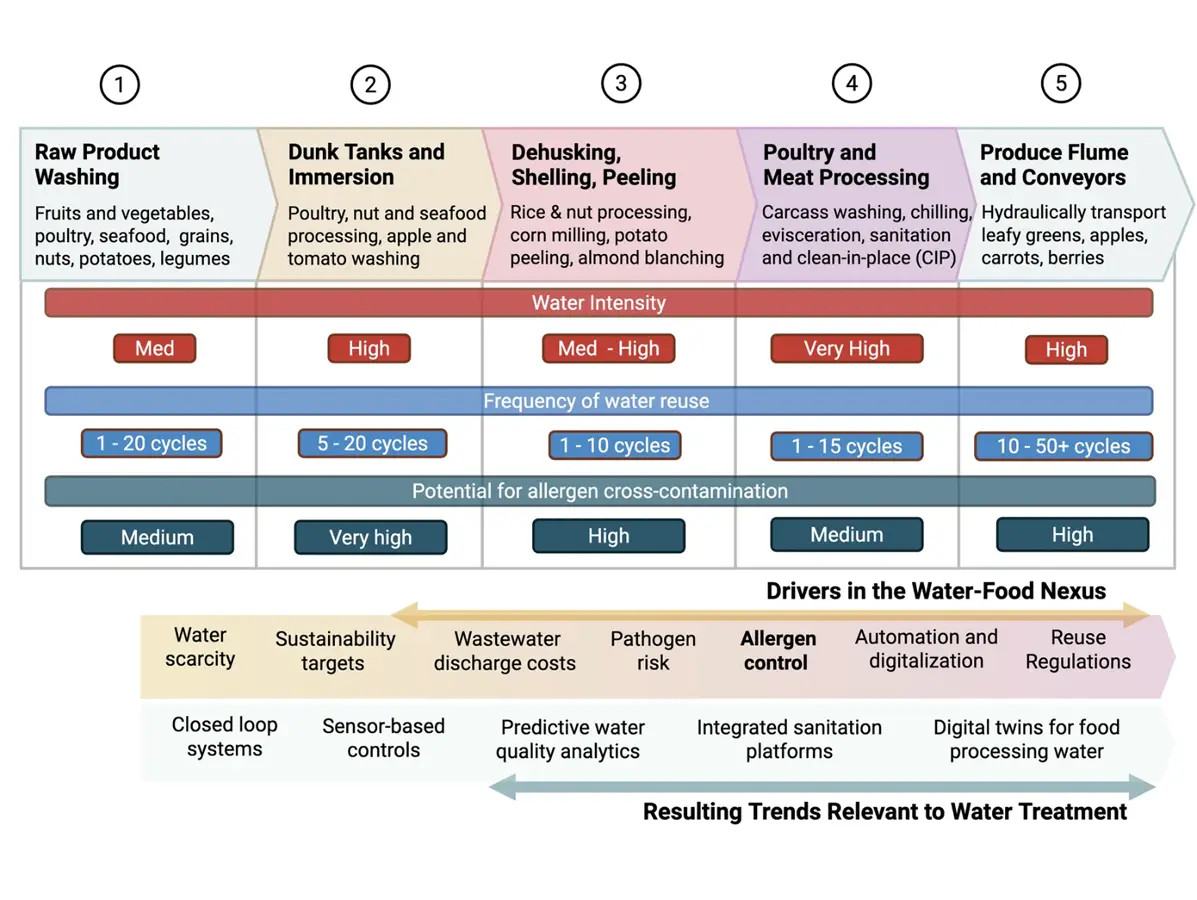
Drivers and trends for water reuse in food processing systems and their impacts on allergen cross-contamination potential. Created in BioRender. Maal-Bared, R. (2026).
Current water-treatment practices differ considerably between food-processing facilities. No standard approach specifically addresses allergen removal from reused water.
Researchers therefore propose several proteins as possible monitoring indicators. These include Bos d 5, Gal d 1 and Ara h 2. Cor a 14 and Ses i 1 may also prove useful.
Larger proteins could help evaluate membrane retention during water treatment. Researchers also see potential for improved analytical and sensor-based monitoring.
Methods such as mass spectrometry may support future allergen detection. Online measurements could eventually complement laboratory analysis and process controls.
More research must establish whether allergens survive specific treatment systems. It must also determine whether residues reach subsequent food products. Until then, water reuse remains an important allergen-management knowledge gap.
Read the entire article on Nature.com
Source: ©vakblad Voedingsindustrie 2026
Magazine Voedingsindustrie has been made possible in part by:



© COPYRIGHT 2026 VOEDINGSINDUSTRIE | ALLE RECHTEN VOORBEHOUDEN
Powered by Wallbrink Crossmedia © 2026