
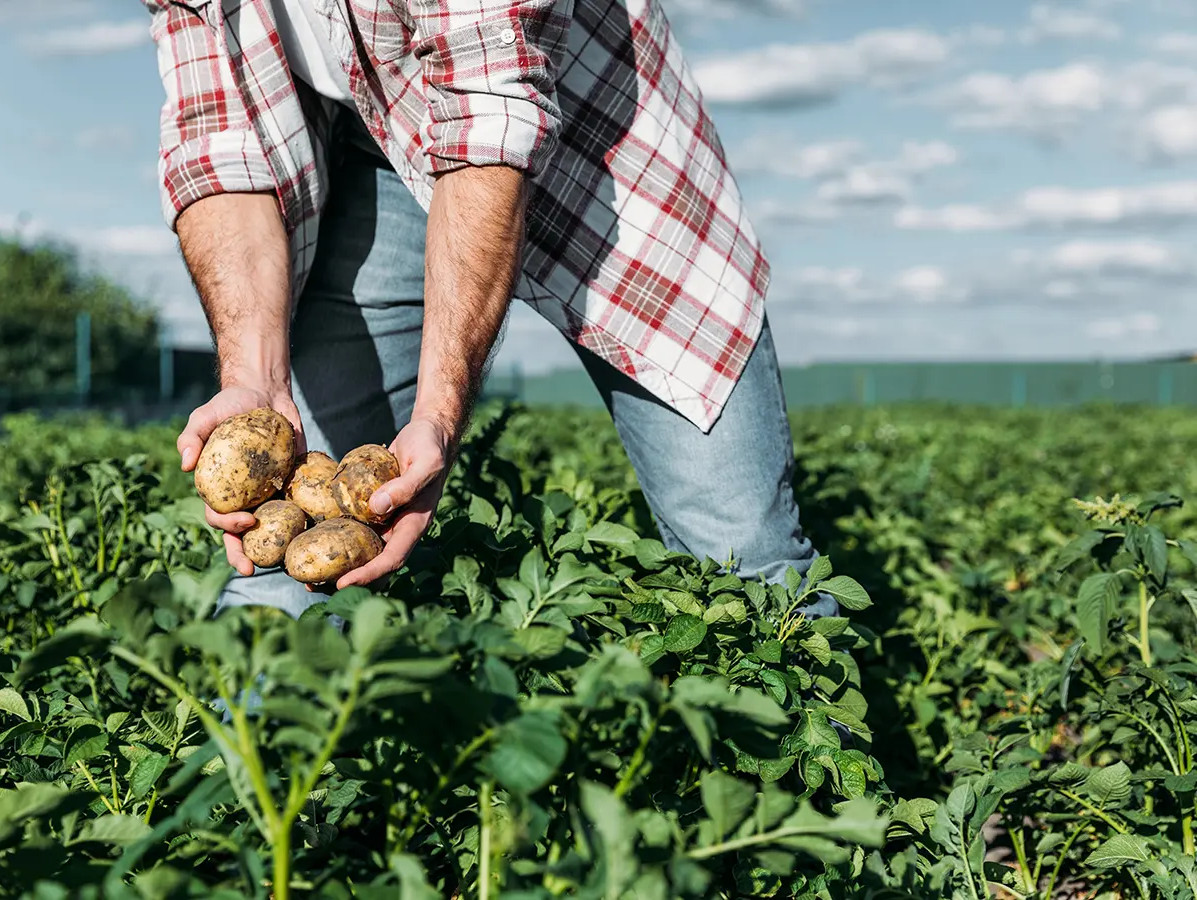
The agricultural sector as we know it is changing. While its economic foundation remains solid, the landscape around it is shifting rapidly. Farmers feel it every day, and so do companies in the food industry that rely on a stable supply chain.
With €77 billion in added value, the sector remains a heavyweight. Exports even grew by 4.8%. Yet the number of agricultural businesses continues to fall. Since 2010, almost one-third has disappeared; compared to 2000, the number has been cut in half. Between 2023 and 2024 alone, 700 agricultural and horticultural businesses closed. That’s a 1.4% drop, leaving 49,900 operations.
The decline is most visible among dairy farms and intensive livestock operations with pigs, poultry and veal calves. Sometimes due to natural succession, sometimes stricter environmental regulations. And yes, voluntary termination schemes also play a part.
It’s not all contraction. At the upper end of the sector, growth continues. In 2024, 17% of businesses fell into the “small” category and 27% into “large.” For comparison: in 2010 these shares were 30% and 17%. The largest companies now account for 62% of the total added value within the Dutch agrocomplex.
And people are paying attention. “De cijfers laten zien dat de Nederlandse landbouw zich blijft aanpassen aan veranderende omstandigheden,” says Allard Jellema of Wageningen Social & Economic Research. “We zien een verdere schaalvergroting, maar ook een toenemende aandacht voor duurzaamheid en innovatie.”
Anyone reading the Staat van de Landbouw, Visserij, Voedsel en Natuur 2025 will see how wide the shift really is. The agrocomplex provides 7.5% of all jobs in the Netherlands. By the end of 2023, the average business reported €4.4 million on its balance sheet. The livestock population continues to shrink: fewer cattle, pigs and chickens. One quarter of all investments is now sustainable. And an interesting outcome: the number of organic farms fell, yet the certified organic acreage increased.
Meanwhile, 37% of businesses generate additional income through activities such as nature management, on-farm sales or care farming. The fishing fleet is also getting smaller (from 578 to 502 vessels). Supermarkets account for 61% of all food sales, and consumers spent €14.3 billion on products carrying a sustainability label.
Source: WUR
Magazine Voedingsindustrie has been made possible in part by:


© COPYRIGHT 2026 VOEDINGSINDUSTRIE | ALLE RECHTEN VOORBEHOUDEN
Powered by Wallbrink Crossmedia © 2026