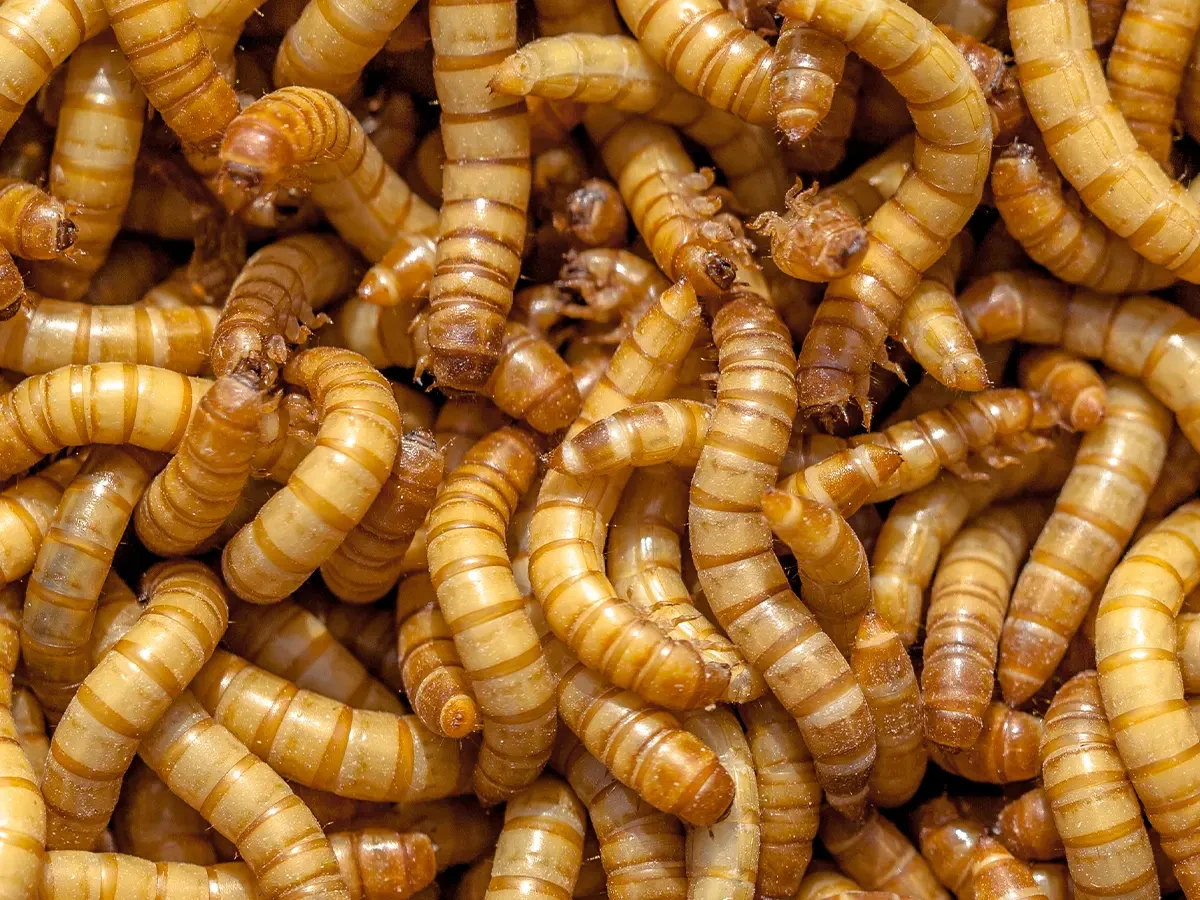
Unsold ready meals and slaughter by-products could eventually find a new use. Insects can turn these materials into animal feed ingredients. That would give food manufacturers another outlet for their leftovers and by-products. According to Wageningen, European rules restrict the use of waste streams containing animal proteins as insect feed. One reason is the risk of transmitting BSE, also known as mad cow disease. How likely are cattle to develop BSE through this route?
Researchers at Wageningen Bioveterinary Research (WBVR) and Wageningen Food Safety Research (WFSR) developed a model to estimate the risk. They examined former foodstuffs from supermarkets, kitchen waste, and processed animal material. They focused on mealworms and black soldier fly larvae.
The researchers used the model to estimate the risk of contaminated material reaching cattle. Among the routes they considered were cross-contamination of animal feed and exposure through pasture where manure is spread. They also modeled what could happen if cattle were accidentally fed pig feed containing insect meal. Under the current European control system, the estimated risk of new BSE cases was very low in every scenario.
The researchers assume that BSE prions cannot multiply in insects. Other waste streams or insect species would require a new risk assessment, says WBVR researcher Clazien de Vos.
The findings could inform future discussions about European rules on insect farming. The researchers say other animal diseases, including African swine fever and foot-and-mouth disease, also warrant further study.
Source: Wageningen Bioveterinary Research (WBVR) en Wageningen Food Safety Research (WFSR)
Magazine Voedingsindustrie has been made possible in part by:



© COPYRIGHT 2026 VOEDINGSINDUSTRIE | ALLE RECHTEN VOORBEHOUDEN
Powered by Wallbrink Crossmedia © 2026