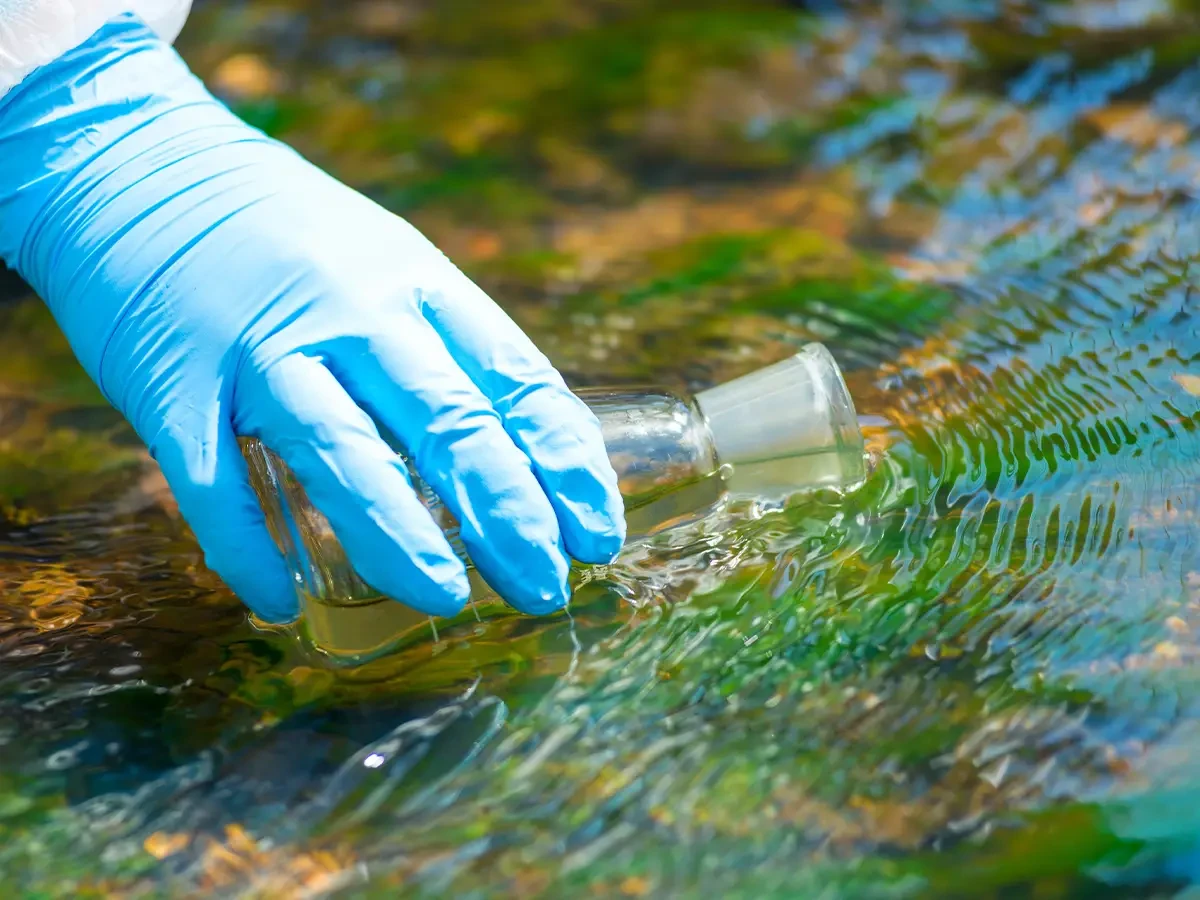
Which pollutants arise from food production, and where do they end up? Questions remain about substances such as PFAS and microplastics. This makes it difficult to target measures where they are needed. The European PURE-FOOD project therefore combines research with practical trials at food businesses. The aim: better monitoring and targeted pollution reduction.
Sixteen partners are collaborating under the European Horizon Europe program. Participants include Farm Frites and Universiteit Leiden. The Belgian research organization VITO coordinates the project, which receives nearly €6 million in European funding. The research runs from September 2026 to August 2030.
PURE-FOOD focuses on pollution affecting water, air, and soil. The research covers organic matter and nutrients, among other pollutants. The partners are also examining microplastics, PFAS, pesticides, and pharmaceuticals. Antibiotic resistance genes are also included in the research.
The researchers are mapping pollution sources and pathways. They are also identifying pollution hotspots. They are assessing the effects on ecosystems and human health. The combined effects of pollutant mixtures are also being examined.
Six case studies form the core of the international research. The partners are studying poultry production in Norway, and dairy production and table olive processing in Greece. They are also examining brewery operations in Spain and potato processing in Belgium. The sixth study focuses on aquaculture in Colombia.
The partners are developing new monitoring methods and sensors or adapting existing ones. They are also demonstrating measures to reduce pollution at its source. In addition, they are testing technologies to remove or reduce pollutants.
The approach is intended to be applicable beyond the six study sites. The project aims to produce an inventory of pollutants, among other outputs. The partners are also working on technologies whose performance will be tested under real-world conditions. In addition, they are developing practical recommendations for businesses and policymakers. EIT Food will share the results through training, webinars, and targeted communications.
Source: EIT Food
Magazine Voedingsindustrie has been made possible in part by:



© COPYRIGHT 2026 VOEDINGSINDUSTRIE | ALLE RECHTEN VOORBEHOUDEN
Powered by Wallbrink Crossmedia © 2026