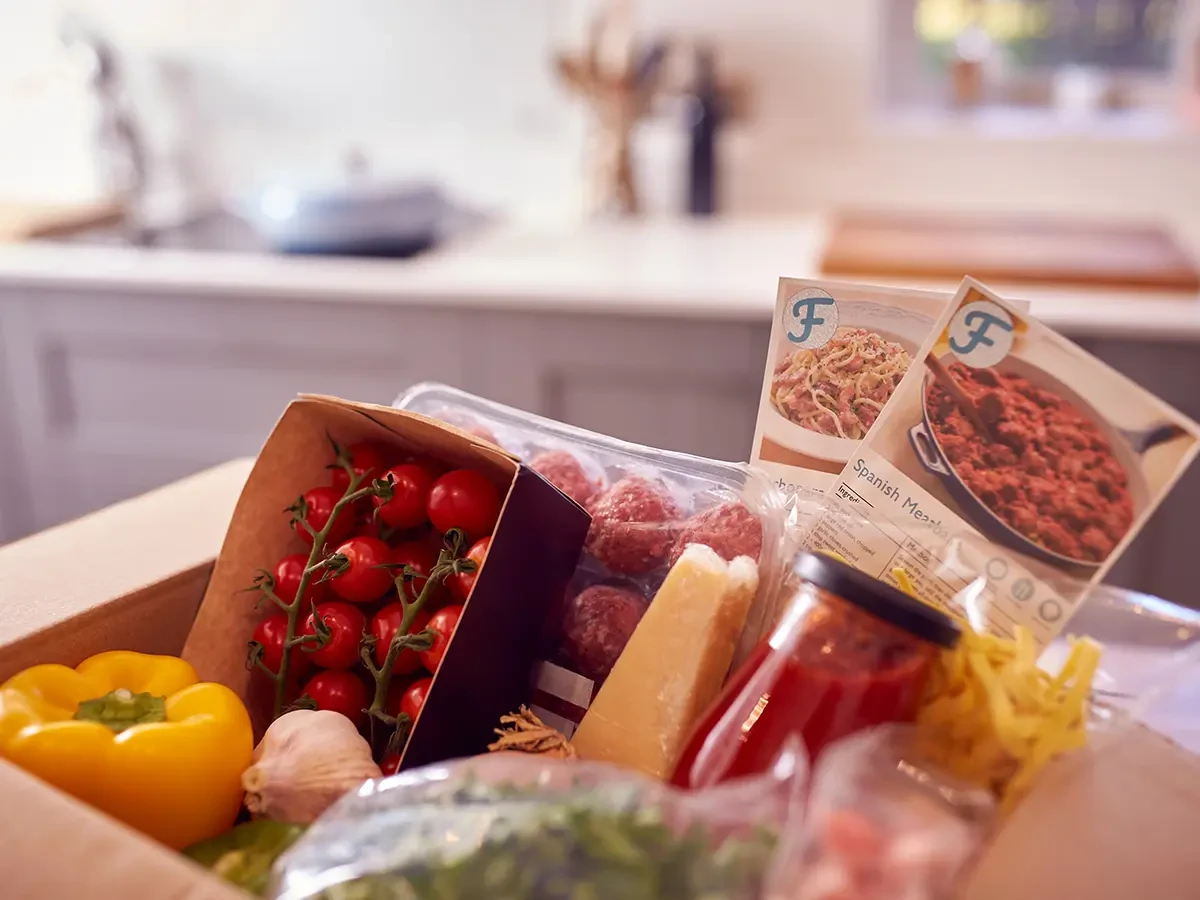
For the first time, more than half of Dutch households buy fresh meal kits. In 2025, the share reached 50.3 percent. Six years earlier, it was 35.8 percent. However, sales revenue is not growing across the board. In early 2026, refrigerated and unrefrigerated kits showed different trends. The fresh meal kit factsheet from GroentenFruit Huis provides insight into sales and buyers.
Dutch supermarkets sold a total of 42 million kilograms of fresh meal kits in 2025. Those sales generated revenue of €206 million. Unrefrigerated kits accounted for 80 percent of the volume. Their share of revenue was 72 percent.
Refrigerated fresh meal kits contain ingredients that have already been cut. These kits represented 20 percent of the volume sold. They accounted for 28 percent of revenue.
In the first half of 2026, revenue from refrigerated kits rose by 3 percent. Revenue from unrefrigerated kits fell by 2 percent. Revenue for the category as a whole declined by 1 percent. These figures are compared with the same period in 2025.
High-income families with children accounted for the largest share of purchased volume. Their share was 33 percent, up from 30 percent in 2020. The share purchased by two-person households fell from 24 to 16 percent over that period.
Meal kits accounted for 73 percent of the volume sold in 2025. Soup kits made up the remaining 27 percent. Madras curry was the best-selling unrefrigerated kit, at 2.88 million kilograms. Tomato soup followed at 2.87 million kilograms, ahead of lasagna at 2.44 million kilograms.
Among refrigerated kits, Asian-style fried rice led with 1.03 million kilograms. Indonesian gado gado and Greek pita gyros followed. Supermarkets sold 0.52 million and 0.50 million kilograms of these kits, respectively. By weight, tomato was the most common ingredient. Onion, zucchini, bell pepper, and carrot followed.
Source: GroentenFruit Huis
Magazine Voedingsindustrie has been made possible in part by:



© COPYRIGHT 2026 VOEDINGSINDUSTRIE | ALLE RECHTEN VOORBEHOUDEN
Powered by Wallbrink Crossmedia © 2026