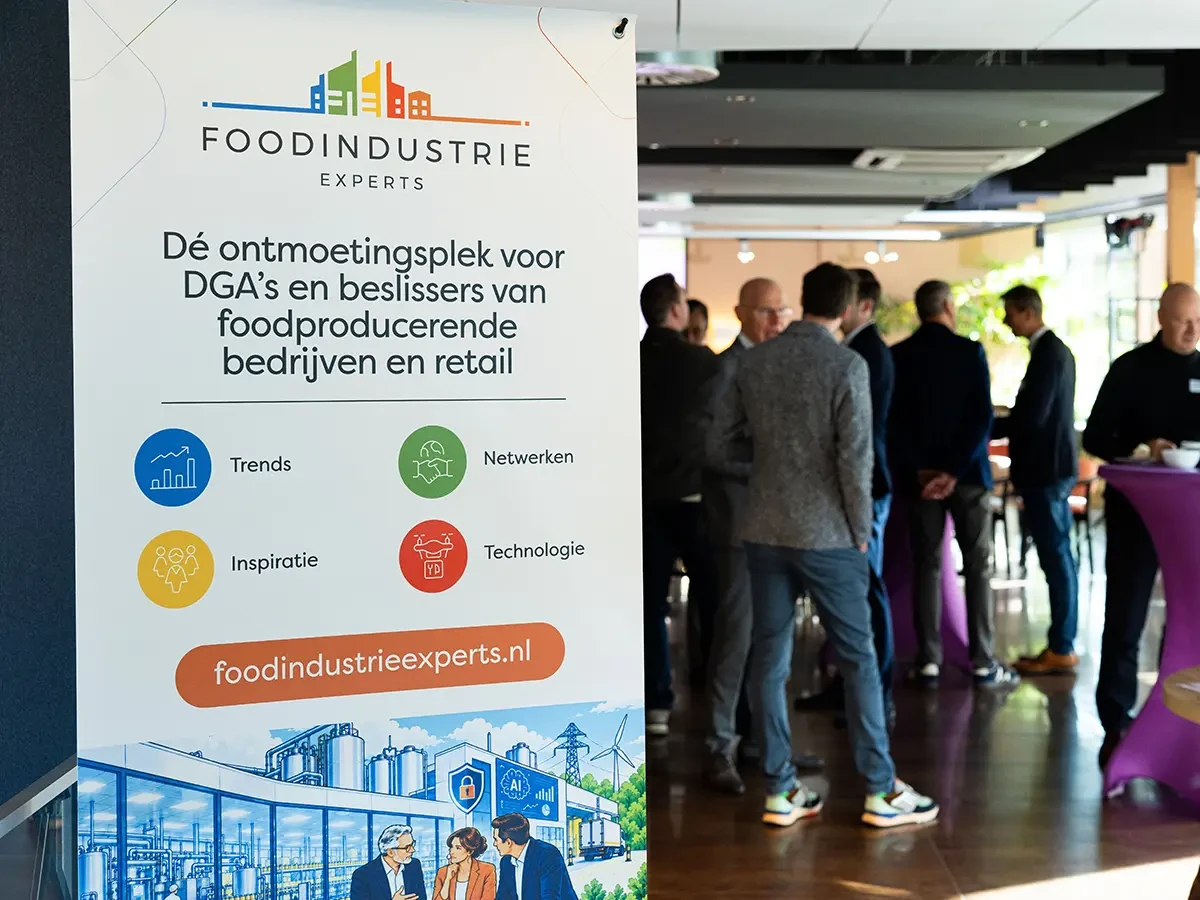
Power grid congestion is slowing expansion, artificial intelligence is changing how people work and market their products, and cyberattacks can bring a plant to a standstill. At the ninth edition of The Future of Food & Retail, it became clear that growth in the food industry now depends on more than market demand and production equipment. Technology offers ways forward, but it also calls for tougher choices and human oversight.
Walking into SVO Vakopleider Food in Houten, the venue for this ninth edition, brought back memories. The beautiful stained glass in the entrance hall was familiar from SVO’s days in Utrecht. This afternoon, though, everyone was looking ahead. The theme was “growing in an environment with constraints.” How do you stay relevant in the years ahead? What obstacles stand in your way, and more importantly, how do you tackle them? Event moderator Saskia Stender of Vakblad Voedingsindustrie opened the event, and Roeland Buijsse, chair of SVO’s executive board, welcomed attendees. Four keynote speakers followed.
Beau Broen, an engineer at Hydrogen Bridgebuilders, opened the program with a problem that is putting a hard limit on growth for more and more companies: a power grid at capacity. Food manufacturers want to move forward, electrify their operations, expand, or do both, but they can’t always count on getting a higher-capacity grid connection. The grid is filling up. So what now? The most familiar option is to install batteries. That can be useful for companies that already have access to electricity or generate their own, though Beau added a caveat: “Direct electrification is highly efficient, but batteries are mainly useful for short-term storage. All they do is shift electricity use from one time to another.” So the first question to ask is, “What energy problem do we need to solve?” The question of whether to use hydrogen comes after that. Hydrogen may be worth considering when energy needs to be stored for longer periods, when processes require high temperatures, or when grid capacity is unavailable. For food companies, one opportunity lies in bringing together solar power, process heating needs, and organic waste streams.
Companies don’t all need to own an electrolyzer or an anaerobic digester. Working with energy companies, logistics providers, and local customers can make an energy system viable. As Beau put it, “A hydrogen market can only exist once demand, supply, logistics, and ownership are properly coordinated. The entire supply chain has to be connected.”
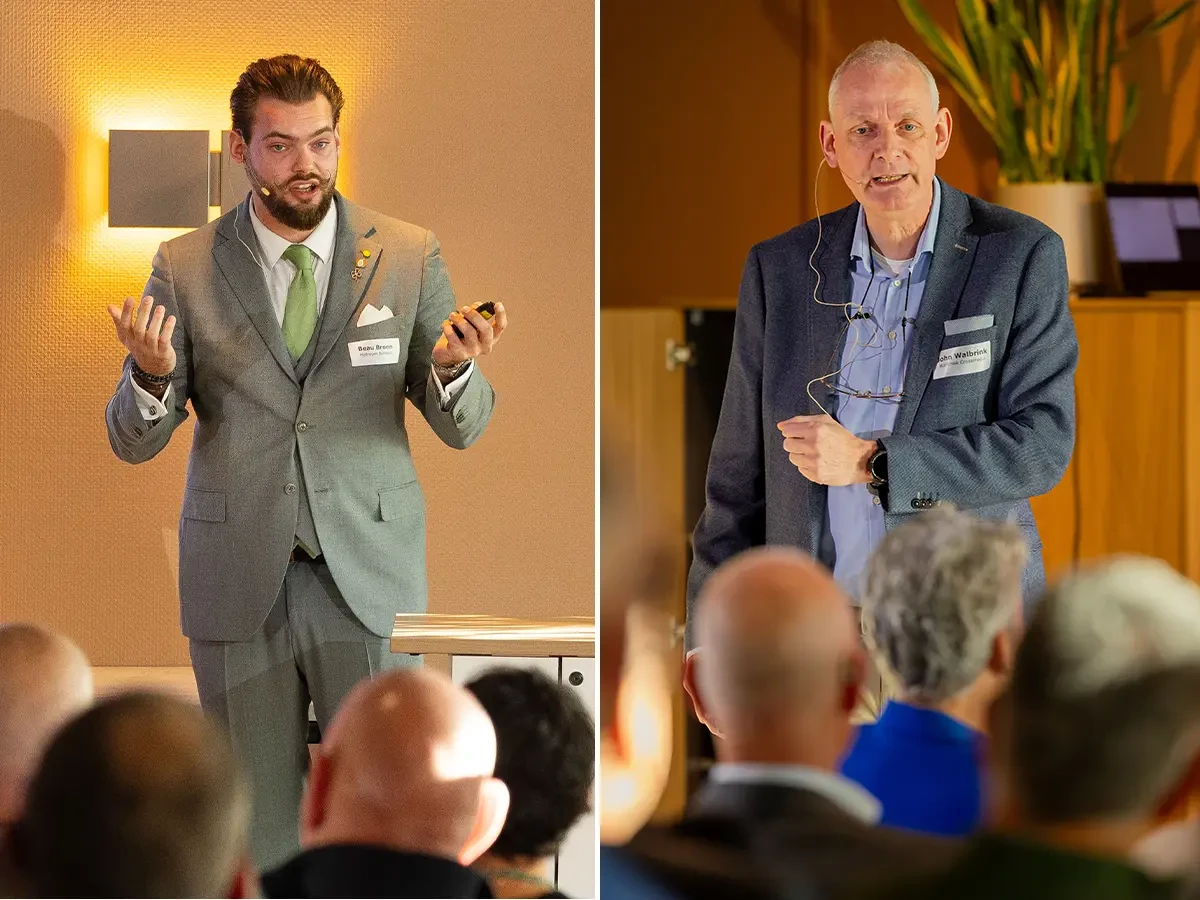
Beau Broen and John Wallbrink
John Wallbrink then showed how quickly AI can build a credible brand. A name, packaging, a website, and a brand story can all be created in a short time, even when there’s barely a business behind the brand. That makes familiar claims about quality, freshness, service, and craftsmanship less persuasive. They may be true, but nearly every competitor makes them. John said companies should test their value proposition by asking what might make customers hesitate, how strong and recognizable the claim is, why customers should buy, and what evidence backs it up. AI can speed up that analysis. Building a stronger brand still takes work. Without human oversight, the main result is more slick, interchangeable content. Companies can stand out by showing exactly what they’ve done, what they know, and what evidence backs up their claims.
After the break, John turned to AI in day-to-day operations. Saving individual employees time doesn’t necessarily improve performance across the business. Projects fail when they start out too big, lack a measurable goal, or give too little attention to data, governance, and security. His advice was to start small, choose an application that shows results right away, and make room for pushback. A digital advisory board that uses AI to offer different perspectives can surface assumptions and suggest alternatives. Business owners are still responsible for checking sources and making decisions. “Ultimately, you make the decision.”
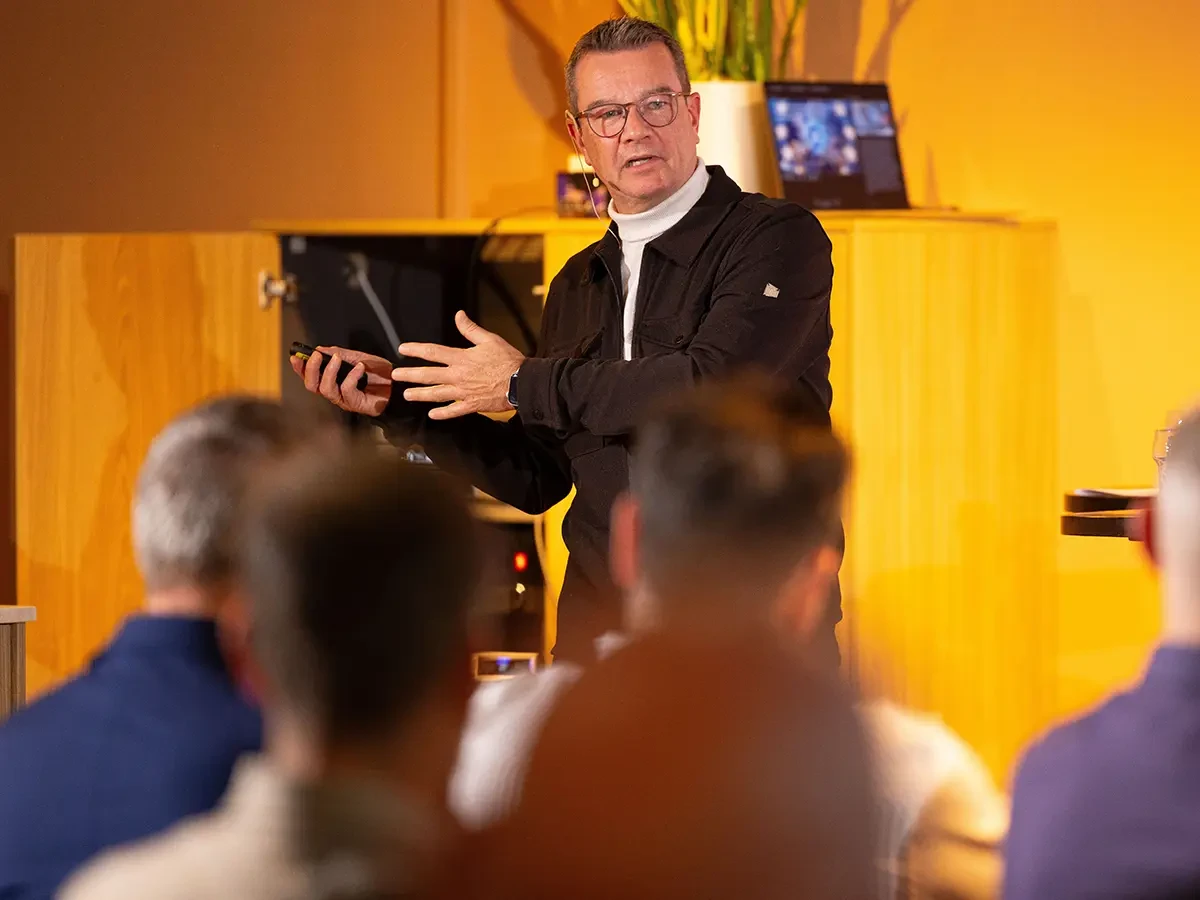
Henk Bijsterbosch
Henk Bijsterbosch of Samen Digitaal Veilig made it clear that cybersecurity now extends beyond IT. He argued that the new cybersecurity law, which took effect on August 15, 2026, makes it a board-level issue. “Board members are personally liable if things go wrong. Incidents directly affect food manufacturers’ ability to keep production running, maintain food safety, and ensure a reliable supply. They also have a major impact on employees. The risk has long extended beyond office IT,” he told the audience. He had everyone’s full attention. You could hear a pin drop. “Production equipment often outlasts its software by years. Outdated operating systems, connections between IT and operational technology, and remote maintenance access can all give attackers a way into the plant.” Companies therefore need to identify their critical processes and suppliers, manage access permissions, set maximum acceptable downtime, and test recovery. Formulations, margins, contracts, and customer data belong in approved digital environments with clear rules for access, storage, and human oversight. A backup is only useful if you can show it can be restored. Companies also need a crisis team that has practiced its response and includes representatives from management, IT, engineering, quality, logistics, and communications. Henk also stressed that responsibility extends across the supply chain. Retailers and other customers are increasingly asking suppliers to demonstrate what cybersecurity measures they’ve put in place. Cybersecurity is therefore becoming part of contracts, audits, and purchasing requirements. The good news is that the Samen Digitaal Veilig platform guides you through the process step by step. A discount code for event attendees and readers of Vakblad Voedingsindustrie makes it even easier to get started.
Over dinner, attendees had plenty of time to network and talk over what they’d heard. Referee and business owner Bas Nijhuis then closed out the program. (As it turns out, he too remembered SVO’s stained glass from his student days, and he briefly recalled his early years working as a butcher in his father’s shop.) With plenty of humor and memorable examples from professional soccer, Bas showed that authority comes from more than the rules and the position you hold. It also takes teamwork, clear communication, and a huge dose of positivity.
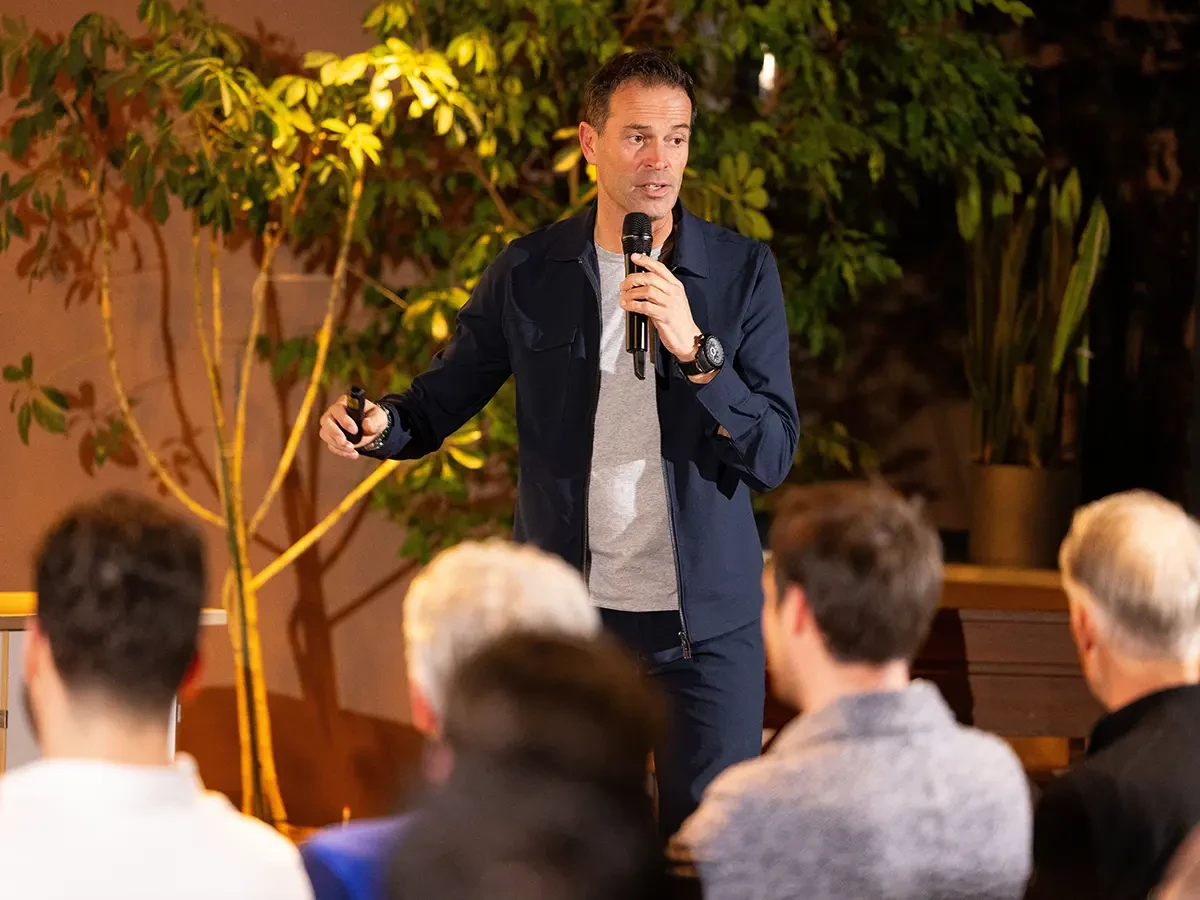
Bas Nijhuis
A referee works with assistant referees, a fourth official, video assistant referees, and plenty of cameras. Bas makes a point of choosing colleagues who complement his strengths and will correct him when needed, even when it’s something he’d rather not hear. The parallel for business owners was clear. A strong team is made up of people who cover one another’s blind spots and bring different ways of working and thinking. Technology often provides more information, but the final call is still yours to make. For Bas, personal contact remains essential. A few clear messages ran through all his examples. Build a relationship with the people you lead and take a genuine interest in them. Raise small frustrations before they fester, with a touch of humor if you can. That gives you more room to explain a decision when tensions run high and makes it easier to get people on board with necessary changes.
One theme ran through the afternoon. Technology gives business owners more options and more responsibilities. The food plant of the future will certainly be shaped by what machines can do, a flexible energy supply, and a digitally resilient supply chain. Above all, it will be shaped by people who are willing to work together and keep thinking critically. Technology changes the game, but people still make the calls.
Photos: ©Marcel van Engelenburg - James Media
Source: Vakblad Voedingsindustrie 2026
Magazine Voedingsindustrie has been made possible in part by:



© COPYRIGHT 2026 VOEDINGSINDUSTRIE | ALLE RECHTEN VOORBEHOUDEN
Powered by Wallbrink Crossmedia © 2026