
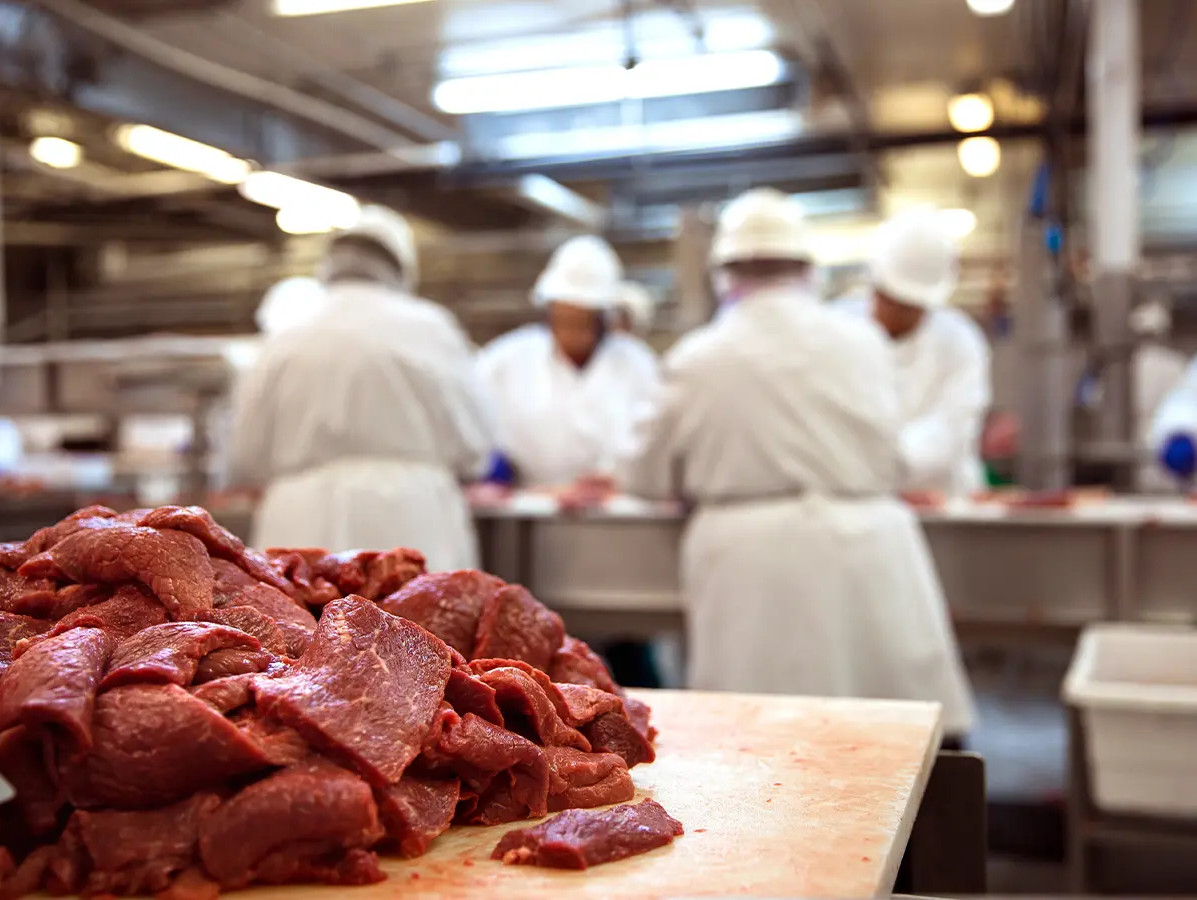
The Dutch Association of Private Employment Agencies (NBBU) opposes the proposed ban on temporary agency workers in the meat sector. According to the industry association, the decision is disproportionate and primarily affects businesses that are not responsible for any wrongdoing. The NBBU also argues that, by introducing a sector-specific ban, the Dutch government is undermining its own legislation. The organization is calling on the Netherlands Labour Authority and the new Wtta to be given the opportunity to do their jobs first.
According to the NBBU, the Wet toelating terbeschikkingstelling van arbeidskrachten (Wtta) is already in place to make the temporary staffing market more transparent. The law will take effect in six months. Even so, the Dutch government is working on a sector-specific ban that would not take effect before 2028. According to the industry association, this creates legal uncertainty for businesses.
The NBBU points out that the Netherlands Labour Authority (NLA) already has the tools needed to tackle abuses. For that reason, the organization believes the Labour Authority and the Wtta should first be allowed to do their jobs.
According to the NBBU, a general ban on hiring temporary agency workers is a blunt instrument. It affects not only rogue operators, but also employment agencies that are affiliated with the NBBU, comply with the SNA and SNF quality standards, and operate under the collective labor agreement for the temporary employment sector. The industry association therefore advocates targeted enforcement and the removal of rogue agencies from the market.
The NBBU also warns that the ban would create an uneven playing field. According to the organization, other sectors would still be allowed to use temporary agency workers, while the meat sector would be excluded. The NBBU also believes there is a risk that work will shift to less transparent arrangements, potentially making the position of labor migrants even more vulnerable.
The industry association supports the Dutch government's ambition to combine job security with labor market flexibility. According to the NBBU, the flexible labor sector is essential for both agility and job security. The organization therefore urges the government to enforce existing laws and regulations, trust the cooperation established under the Wtta, and not abandon the use of temporary agency work.
Source: NBBU
Magazine Voedingsindustrie has been made possible in part by:



© COPYRIGHT 2026 VOEDINGSINDUSTRIE | ALLE RECHTEN VOORBEHOUDEN
Powered by Wallbrink Crossmedia © 2026