
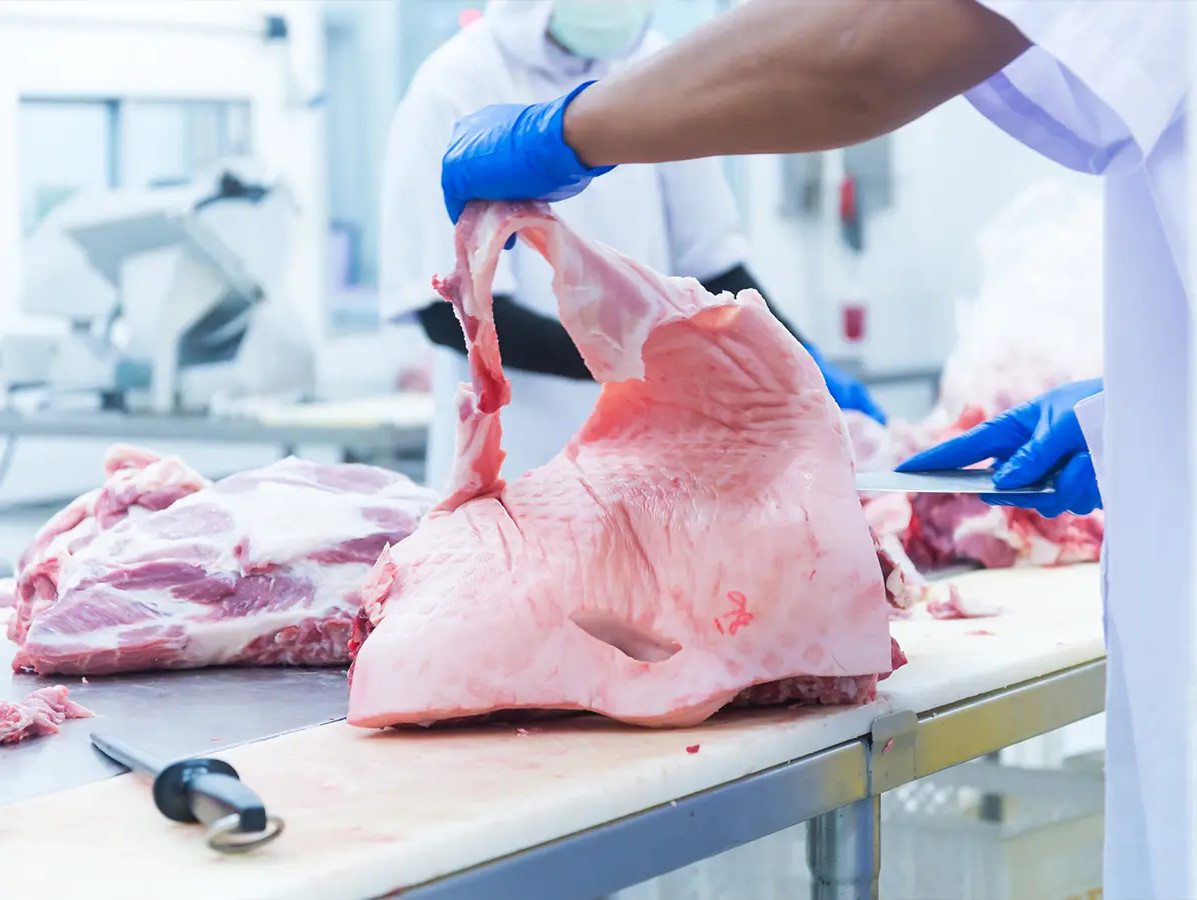
Occupational risks and labor violations remain persistent problems in the meat sector. According to the Dutch Labor Inspectorate, inspections and enforcement alone are not enough to bring about lasting change. The inspectorate sees structural causes that require a different approach.
The Labor Inspectorate examined the period from 2023 through the first quarter of 2026. During that time, it received 396 reports involving the meat sector. Half of those reports concerned workplace accidents. The other half involved suspected violations of labor laws. In addition, the inspectorate carried out hundreds of investigations. More than €1.1 million in fines were imposed during that period. More than half of those fines were issued to temporary employment agencies operating in the meat sector.
According to the inspectorate, meat companies continue to rely heavily on migrant workers. Many perform regular work through temporary employment arrangements. As a result, the risks of unhealthy, unsafe, and unfair working conditions remain high.
Marijke Kaptein, Director of Temporary Employment Supervision, said: "We have been seeing the same patterns for years. Intensive inspections and investigations are necessary, but they do not address the underlying causes."
The Labor Inspectorate continues to identify underpayment, including unlawful deductions, illegal employment, and recurring workplace accidents. Physical strain caused by repetitive work also remains a significant risk. In addition, the inspectorate reports high housing costs, intimidation, unexpected charges for work equipment, such as knives, and summary dismissal of migrant workers.
According to the Labor Inspectorate, several factors reinforce one another. The sector faces international competitive pressure, a wide range of employment relationships throughout the supply chain, and a strong dependence on temporary agency workers for regular work. As a result, there is little incentive to make lasting structural improvements.
The Labor Inspectorate will continue intensive inspections in the coming years. At the same time, it emphasizes the importance of employing more workers directly, introducing job rotation, and investing in innovation and automation. Minister Vijlbrief of Social Affairs and Employment announced that, starting March 1, 2028, the meat sector will no longer be allowed to use temporary agency workers.
Source: Nederlandse Arbeidsinspectie
Magazine Voedingsindustrie has been made possible in part by:



© COPYRIGHT 2026 VOEDINGSINDUSTRIE | ALLE RECHTEN VOORBEHOUDEN
Powered by Wallbrink Crossmedia © 2026