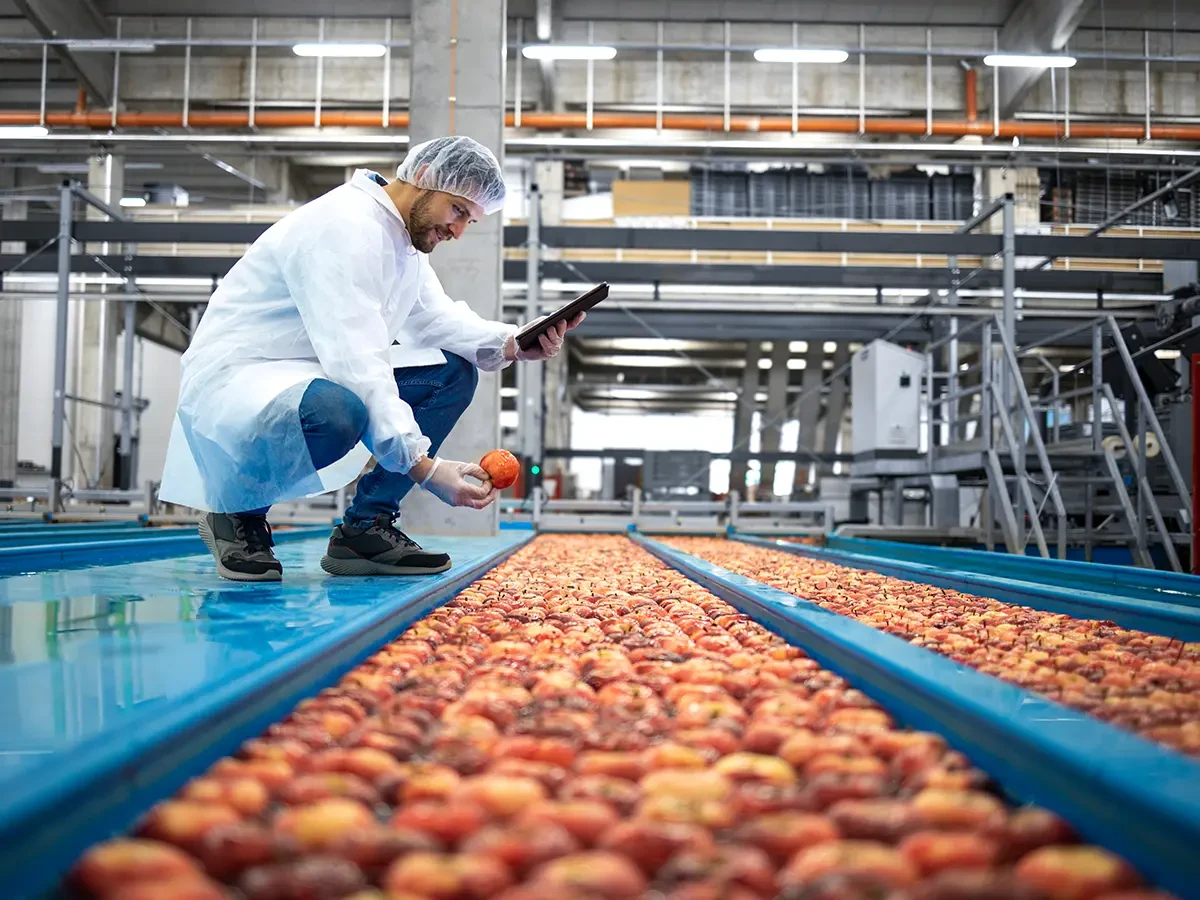
How much pesticide residue remains after processing? And how much of it do people consume when they eat the finished product? The FAO and WHO report on residues in food addresses both questions. In October 2026, experts met in Prague to evaluate 35 pesticides. They proposed maximum residue limits for 33 of them to the international Codex Committee on Pesticide Residues.
The experts estimated how much indoxacarb Dutch children could consume from two types of lettuce, including romaine. For both types, the estimated intake was twice the acute reference dose. This dose indicates how much of a substance a person can safely consume over a short period, expressed per kilogram of body weight.
For raw endive, the estimated intake among Dutch children was 190 percent of that dose. For cooked endive, the experts estimated that Dutch toddlers could consume 350 percent of the dose.
The experts recommend a residue limit of 15 milligrams per kilogram for the fungicide captan in apples. For dried apples, the proposed limit is 50 milligrams per kilogram. The report also includes estimates of residue levels in applesauce, apple jelly, and canned apples. The experts use those figures to calculate intake.
The experts base their proposals for the milk category on whole milk. For fat-soluble residues, they also calculate a separate limit for milk fat when enough data are available. The proposed limit for the fungicide bixafen in milk is 0.2 milligrams per kilogram. For milk fat, the experts recommend 3 milligrams per kilogram.
Source: FAO
Magazine Voedingsindustrie has been made possible in part by:



© COPYRIGHT 2026 VOEDINGSINDUSTRIE | ALLE RECHTEN VOORBEHOUDEN
Powered by Wallbrink Crossmedia © 2026