
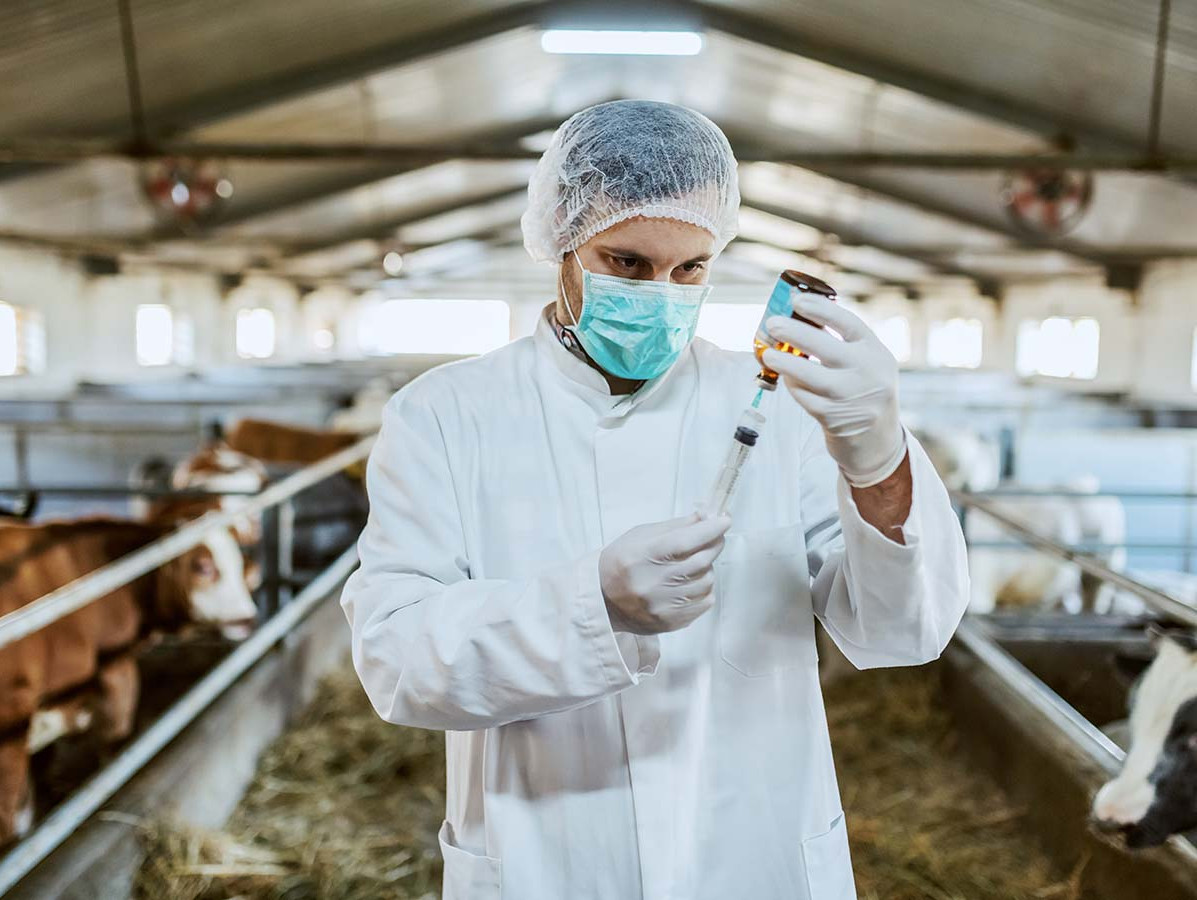
A recent report by the European Food Safety Authority (EFSA) indicates that levels of drug residues and other substances in animals and animal-derived food remain low.
EFSA's report examines a range of substance groups, including hormones, antibacterial agents, environmental contaminants, prohibited substances, and other veterinary drugs. This analysis is based on data provided by EU member states, Iceland, and Norway. The findings offer reassurance to consumers about the safety of their food.
The 2022 research shows that the percentage of non-compliant samples stands at 0.18%. This figure is consistent with the past 13 years, where non-compliance varied from 0.17% to 0.37%. In 2021, this percentage was at 0.17%. Notably, targeted samples, taken to detect illegal use or non-compliance with maximum allowed levels, showed a low level of non-compliance at 0.27%. This is comparable to the previous four years, which saw percentages ranging from 0.24% to 0.35%.
The report also highlights the accessibility of data for the public and researchers. The comprehensive dataset, consisting of approximately 13 million analysis results, will soon be made available through the EFSA Knowledge Junction. This public archive is designed to enhance transparency, reproducibility, and usability of evidence in the risk assessment of food and feed safety. With this, EFSA aims for continuous improvement in monitoring food safety in Europe.
Source: EFSA
Magazine Voedingsindustrie has been made possible in part by:



© COPYRIGHT 2026 VOEDINGSINDUSTRIE | ALLE RECHTEN VOORBEHOUDEN
Powered by Wallbrink Crossmedia © 2026